How Do Carbon Credits Help Companies Meet Their Net Zero Targets?
- Dolly Soni

- May 1
- 4 min read
Updated: May 2

As India accelerates its commitment to combating climate change, carbon credits for net zero targets India have moved from a niche financial instrument to a mainstream corporate strategy. With India pledging net zero emissions by 2070 at COP26 and reinforcing this commitment through updated Nationally Determined Contributions (NDCs), businesses across sectors are now under growing pressure — and opportunity — to engage with voluntary and compliance carbon markets. Whether you are a large enterprise, an emerging startup, or a mid-size manufacturer, understanding how carbon credits work within India's evolving climate framework is no longer optional. It is essential.
What Are Carbon Credits and Why Do They Matter for India?
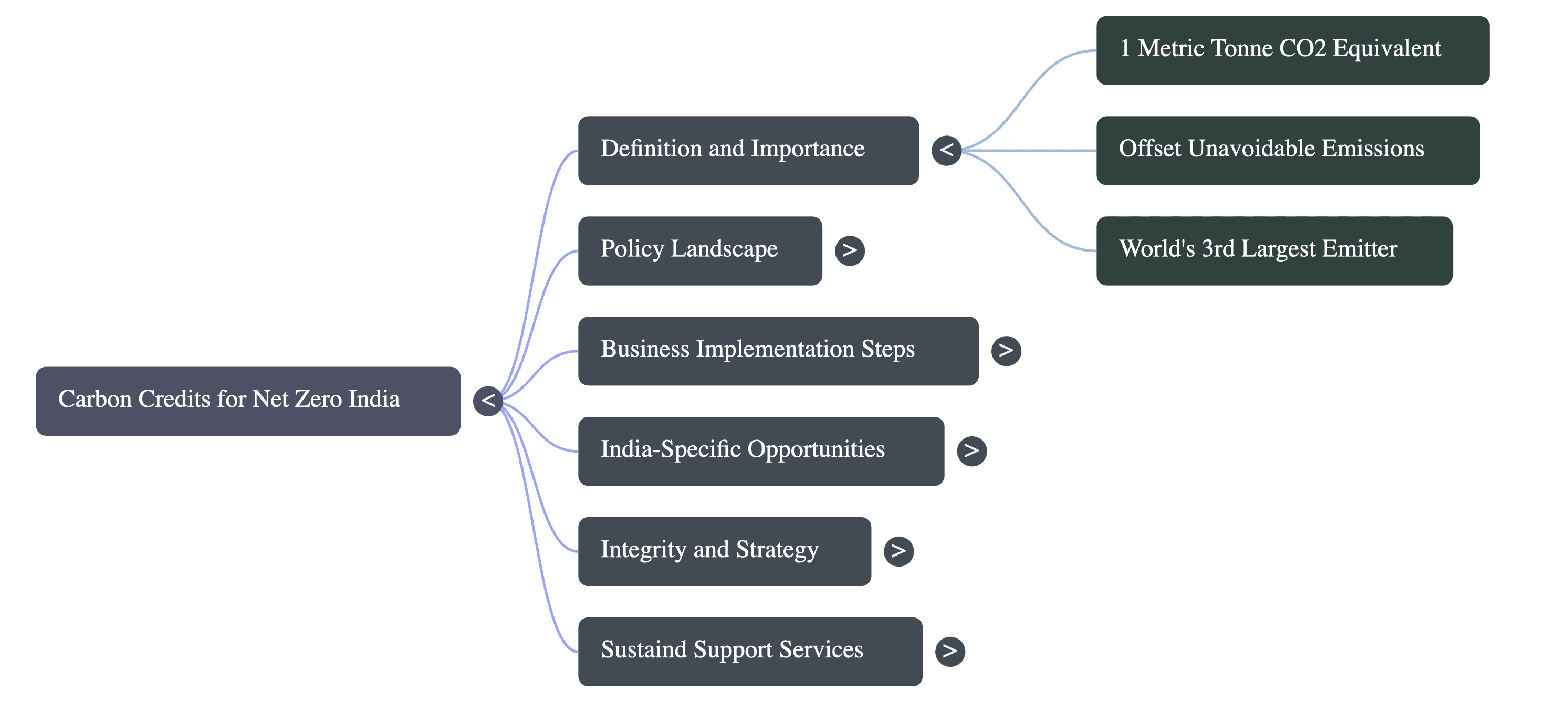
A carbon credit represents one metric tonne of carbon dioxide (or its equivalent in other greenhouse gases) that has been reduced, avoided, or removed from the atmosphere. These credits are generated by projects — such as renewable energy installations, afforestation drives, or clean cookstove programs — and can be purchased by companies seeking to offset their unavoidable emissions.
For India, the carbon credit mechanism is especially significant. The country is the world's third-largest emitter of greenhouse gases, yet it is also one of the most vulnerable to climate impacts. The dual challenge of enabling economic growth while decarbonising key sectors makes carbon markets a pragmatic tool. India has already demonstrated strong supply-side credentials — it was historically one of the largest generators of Certified Emission Reductions (CERs) under the Clean Development Mechanism (CDM) of the Kyoto Protocol.
India's Net Zero Ambition: The Policy Landscape
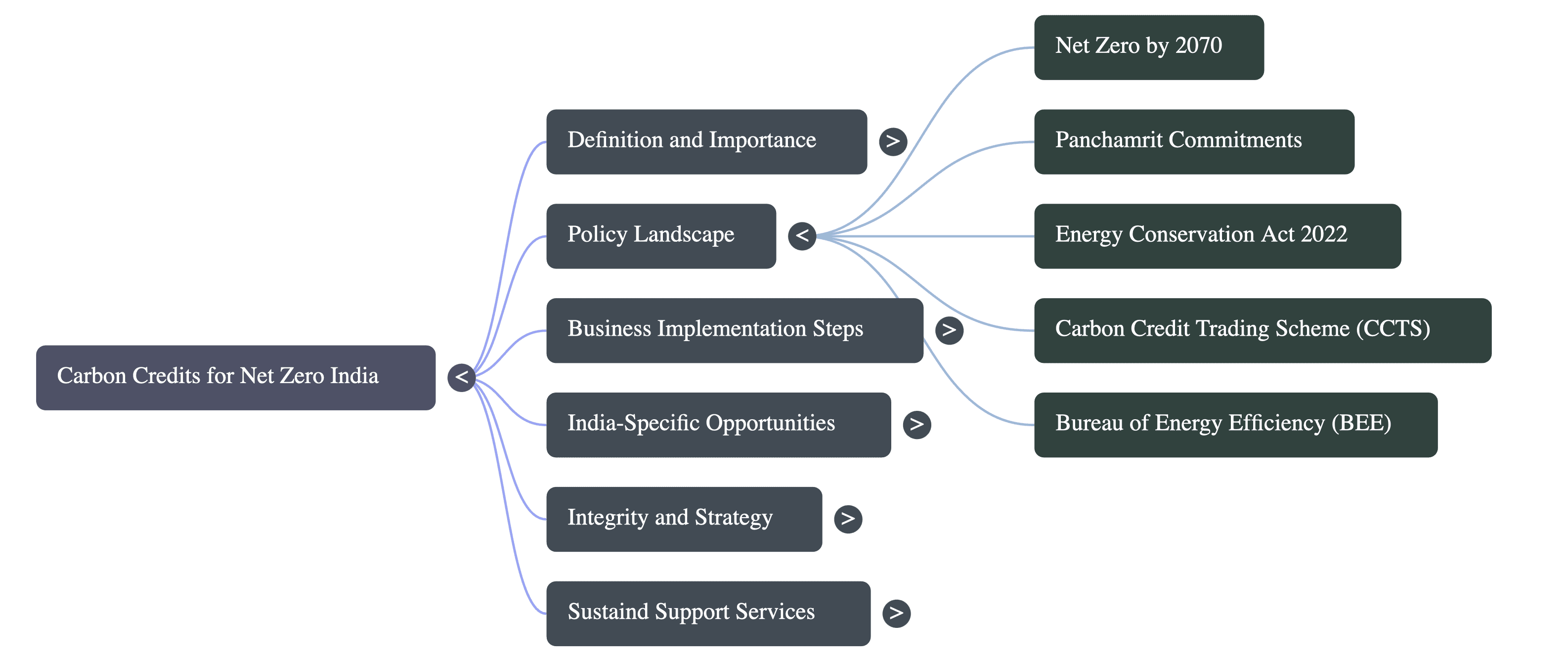
India's net zero trajectory is shaped by a set of bold targets collectively known as the Panchamrit commitments: reaching 500 GW of non-fossil energy capacity, meeting 50% of energy requirements from renewables, reducing emissions intensity of GDP by 45%, and achieving net zero by 2070 — all by the end of this century.
A landmark development in this space is the Energy Conservation (Amendment) Act, 2022, which laid the legal foundation for India's domestic Carbon Credit Trading Scheme (CCTS). The Bureau of Energy Efficiency (BEE) is developing the framework for this domestic carbon market, with pilot phases underway in energy-intensive sectors such as cement, aluminium, pulp and paper, and chlor-alkali. This signals a decisive shift — from India being primarily a seller in international carbon markets to also building a robust domestic trading ecosystem.
How Businesses Can Use Carbon Credits on the Path to Net Zero
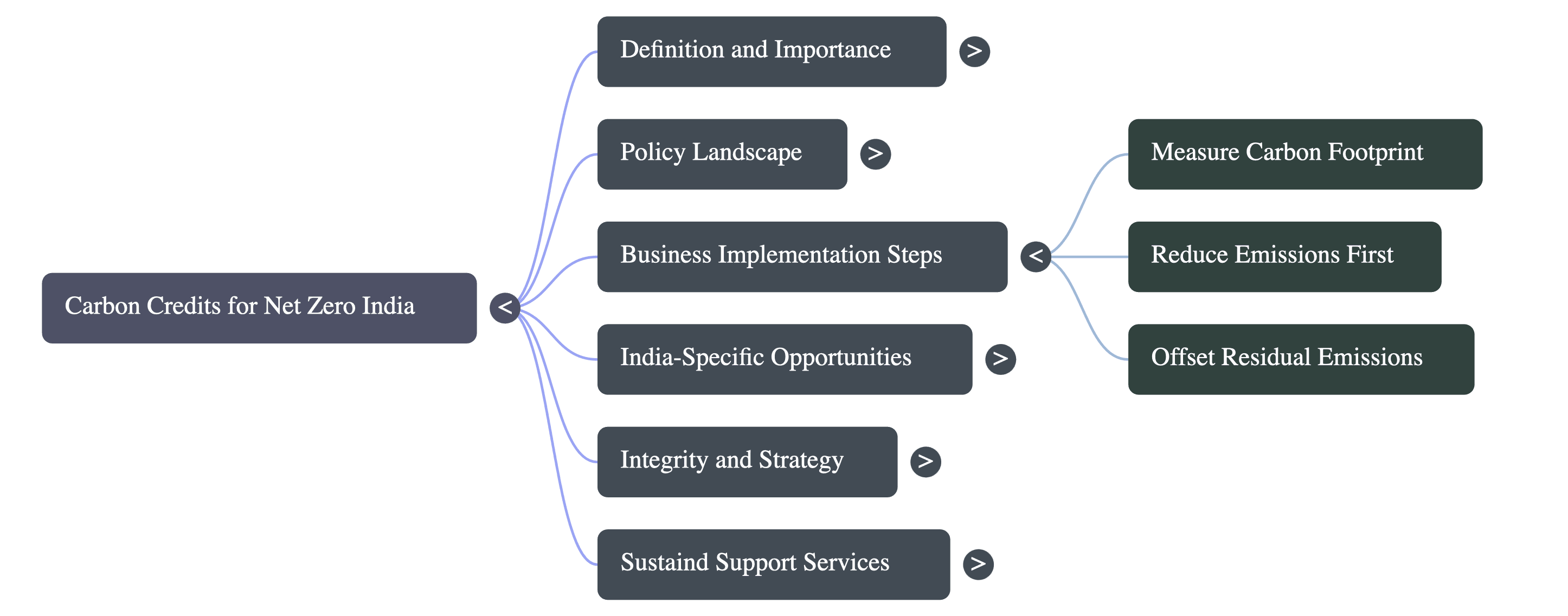
Navigating carbon credits as a business involves three core steps:

1. Measure Your Carbon Footprint — Before buying or selling credits, organisations must establish a clear baseline of their Scope 1, Scope 2, and Scope 3 emissions. This requires robust data collection, emission factor mapping, and third-party verification aligned with frameworks like the GHG Protocol.
2. Reduce What You Can — Carbon credits are not a licence to pollute. Best practice demands that companies implement genuine emission reduction measures first — energy efficiency upgrades, renewable energy adoption, supply chain optimisation — before turning to offsets.
3. Offset Residual Emissions — For emissions that cannot yet be eliminated, high-quality carbon credits from verified projects — certified under standards such as Verra's Verified Carbon Standard (VCS) or Gold Standard — can be purchased to neutralise the residual footprint.
India-Specific Carbon Credit Opportunities
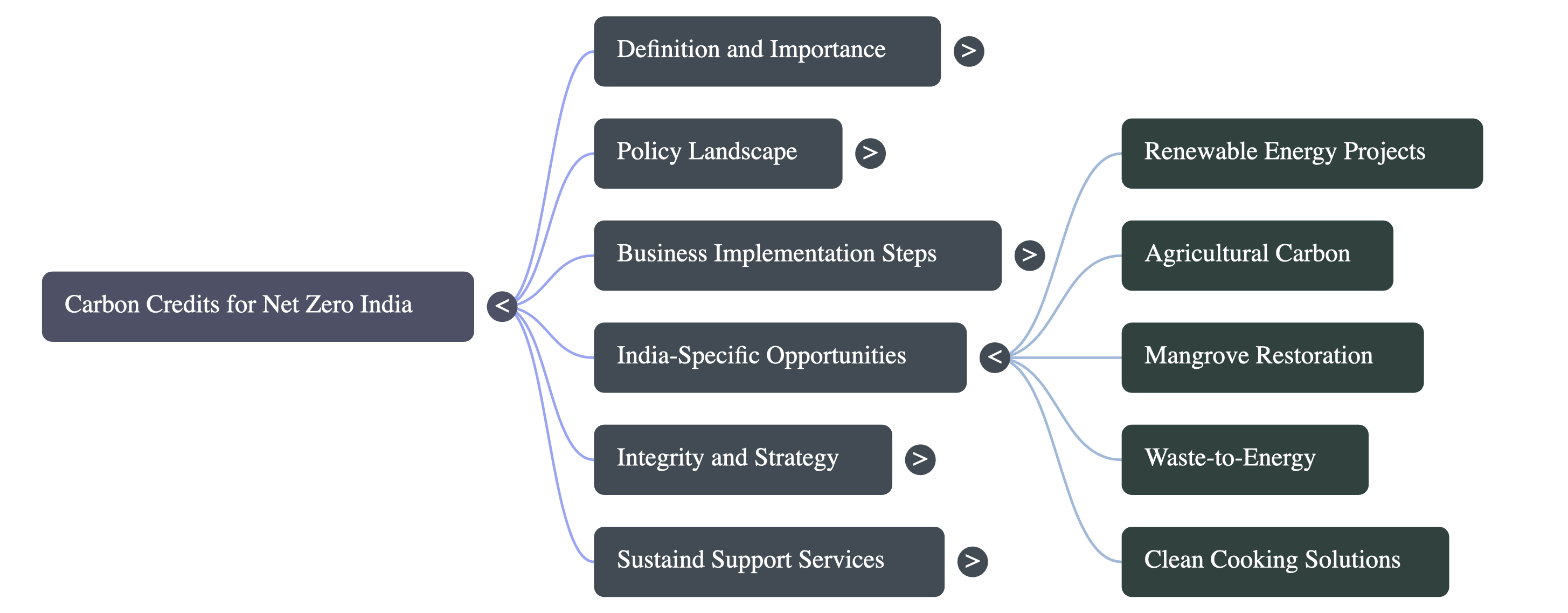
India offers a rich pipeline of carbon credit project types that businesses can support or invest in. Solar and wind energy projects in states like Rajasthan, Gujarat, and Tamil Nadu continue to generate significant volumes of credits. Agricultural carbon — including soil carbon sequestration, rice cultivation methods like the System of Rice Intensification, and biochar application — is gaining traction as a frontier market.
Mangrove restoration along coastal belts, community-based clean cooking solutions, and waste-to-energy projects in urban centres represent additional avenues with strong co-benefits: biodiversity conservation, rural livelihoods, and public health improvements. For Indian companies, sourcing credits from domestic projects not only supports the national climate agenda but also resonates strongly with ESG-conscious investors and consumers.
Greenwashing vs. Genuine Climate Action: A Critical Distinction
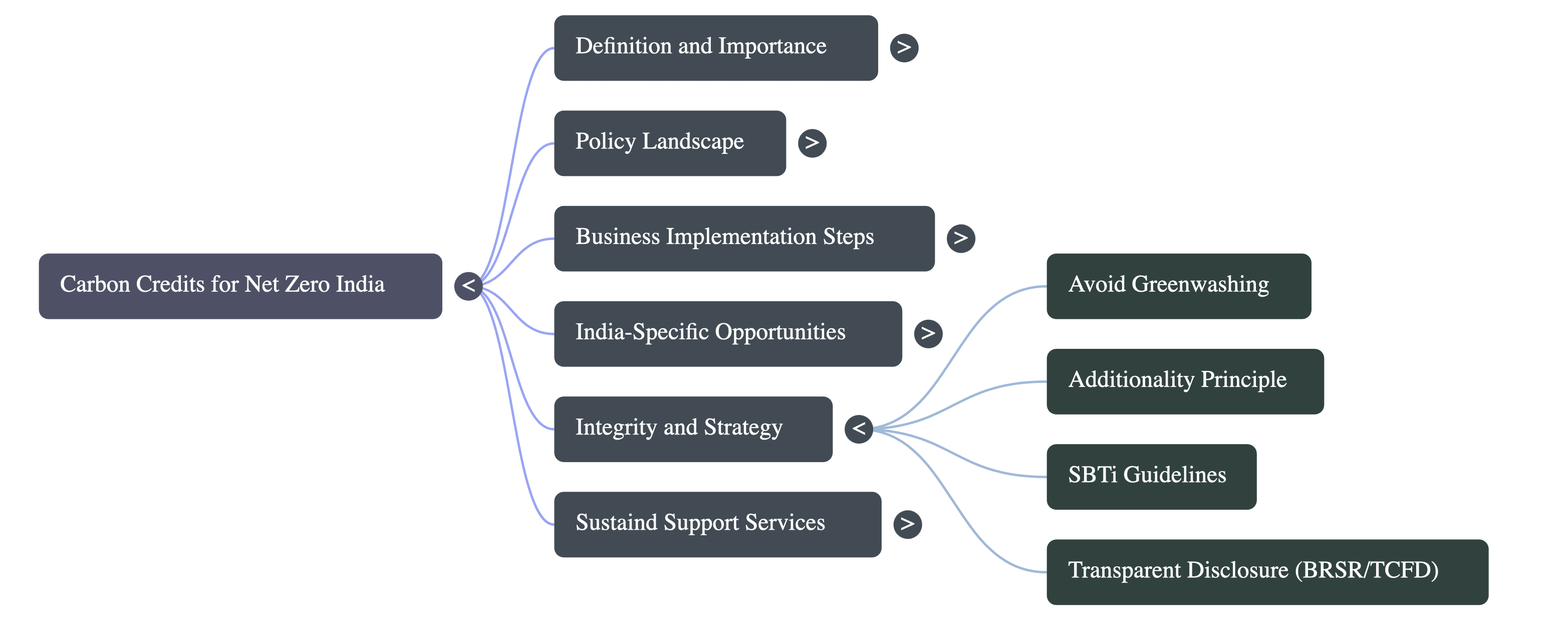
As carbon markets grow in India, so does the risk of greenwashing — making misleading claims about environmental credentials. Regulators, investors, and civil society are increasingly scrutinising corporate net zero pledges. The Science Based Targets initiative (SBTi) has set clear guidelines distinguishing between neutralisation (using high-quality carbon removal) and compensation (using avoidance credits). Companies that rely solely on cheap offsets without reducing absolute emissions face reputational and regulatory risk.
Genuinely credible net zero strategies integrate emission reductions, transparent disclosure (aligned with TCFD or BRSR frameworks in India), and selective use of high-integrity carbon credits. The emphasis should always be on additionality — ensuring the funded project represents a real, measurable, and additional climate benefit that would not have occurred otherwise.
How Sustaind Supports Your Net Zero Journey
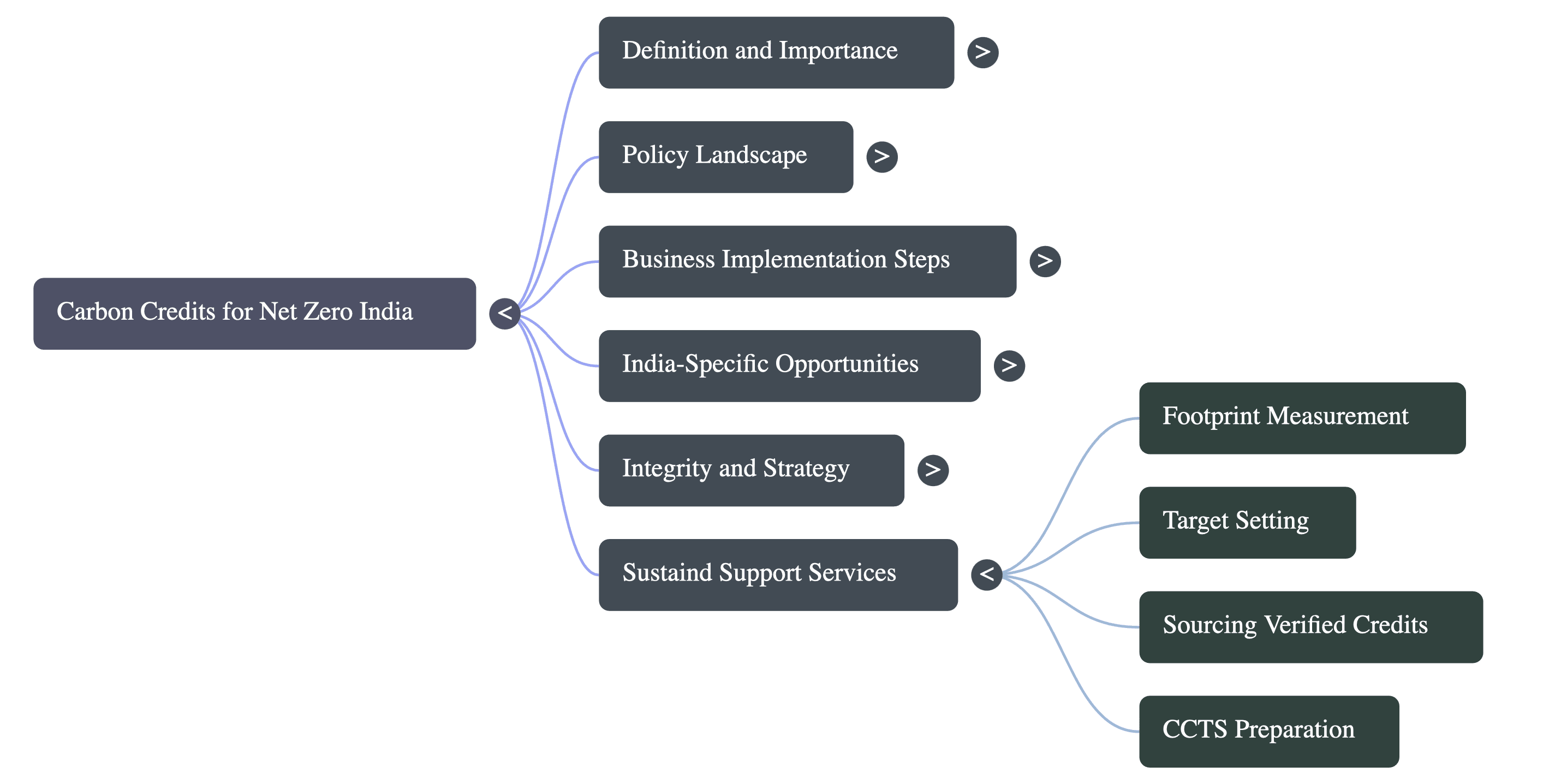
At Sustaind, we recognise that navigating India's carbon market landscape requires more than a transactional approach. Our platform is designed to guide organisations through every stage of the net zero journey — from precise carbon footprint measurement and science-based target setting, to sourcing verified, high-quality carbon credits from Indian and global project registries.
We work with businesses to build credible, audit-ready sustainability strategies that go beyond compliance. Whether you are preparing for India's forthcoming Carbon Credit Trading Scheme, responding to supply chain ESG due diligence requirements, or committing to a voluntary net zero pledge, Sustaind provides the tools, expertise, and project access you need to act with confidence and integrity.
Looking Ahead: The Future of Carbon Markets in India
India's domestic carbon market is still maturing, but the direction of travel is clear. As CCTS regulations firm up, as mandatory ESG disclosures expand under SEBI's BRSR framework, and as international carbon market mechanisms under Article 6 of the Paris Agreement develop, the strategic importance of carbon credits for Indian businesses will only intensify.
Companies that invest early in understanding carbon markets, building measurement infrastructure, and sourcing quality credits will be far better positioned — financially, reputationally, and operationally — as India's climate economy scales up over the coming decade.
Conclusion
Carbon credits are not a silver bullet, but they are a powerful and necessary component of any credible net zero strategy in India. Used intelligently — alongside genuine emission reductions and transparent reporting — they can help businesses align with India's climate ambitions while unlocking new avenues of value creation. The window to act early is open now. The question is: will your business lead or follow?
Ready to take your first step toward net zero?


Comments