
- Climate Risk Assessment
- Sustainability Service
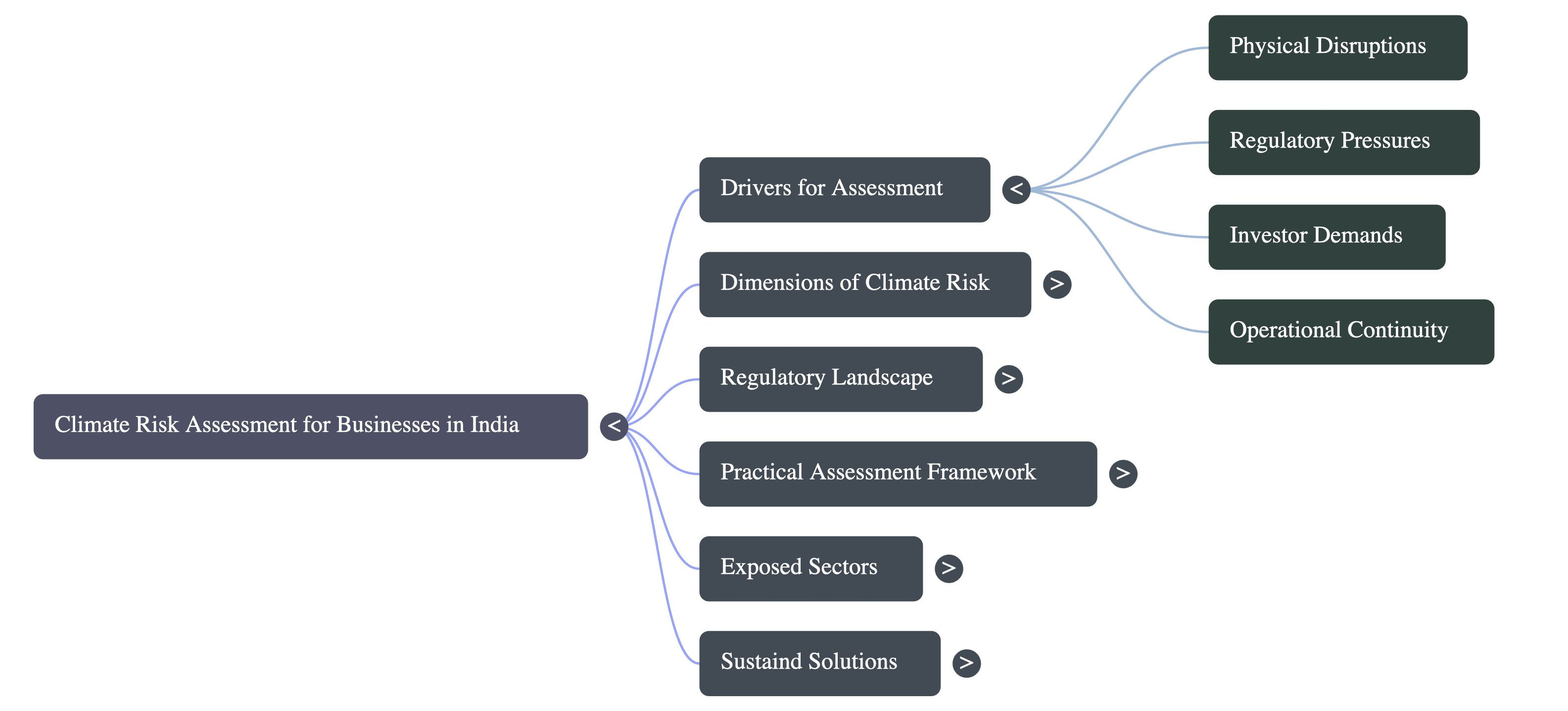
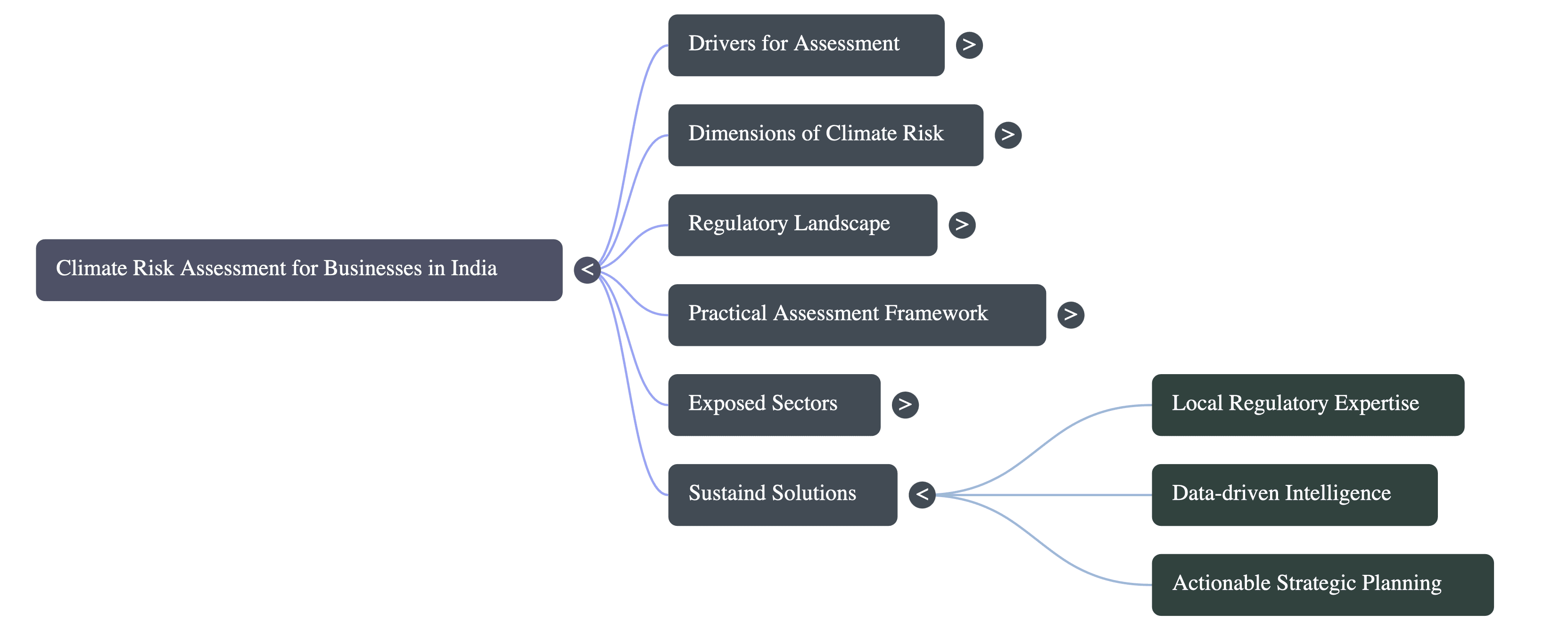
Climate Risk Assessment for Businesses in India: A Strategic Imperative
Climate risk assessment for businesses in India is no longer a box-ticking exercise — it is fast becoming a defining factor in long-term business survival. From the flood-prone industrial corridors of Gujarat and Maharashtra to the heat-stressed agricultural supply chains of the Indo-Gangetic Plain, Indian enterprises are increasingly exposed to physical and financial disruptions triggered by a rapidly changing climate. As global investors, regulators, and consumers demand greater accountability, businesses that proactively assess and manage climate risks are the ones best positioned to attract capital, maintain operational continuity, and build lasting trust. Sustaind helps organisations take this critical first step with confidence.
Why Climate Risk Matters More Than Ever for Indian Businesses
India is among the world's most climate-vulnerable nations. The country regularly appears in global risk indices for extreme heat, erratic monsoons, coastal flooding, and water scarcity. But vulnerability is not just a humanitarian concern — it is a direct business concern. A heatwave that disrupts factory operations, a flood that damages supplier infrastructure, or a drought that drives up raw material costs can have immediate and measurable impacts on profitability.
Beyond physical risks, Indian businesses also face transition risks — the financial implications of shifting to a low-carbon economy. Policy changes such as India's updated Nationally Determined Contributions (NDCs), the Bureau of Energy Efficiency's (BEE) enhanced efficiency standards, and the emerging carbon credit market are reshaping the operating environment. Companies that fail to anticipate these shifts risk stranded assets, regulatory penalties, and reputational damage.
The Two Dimensions of Climate Risk: Physical and Transitional
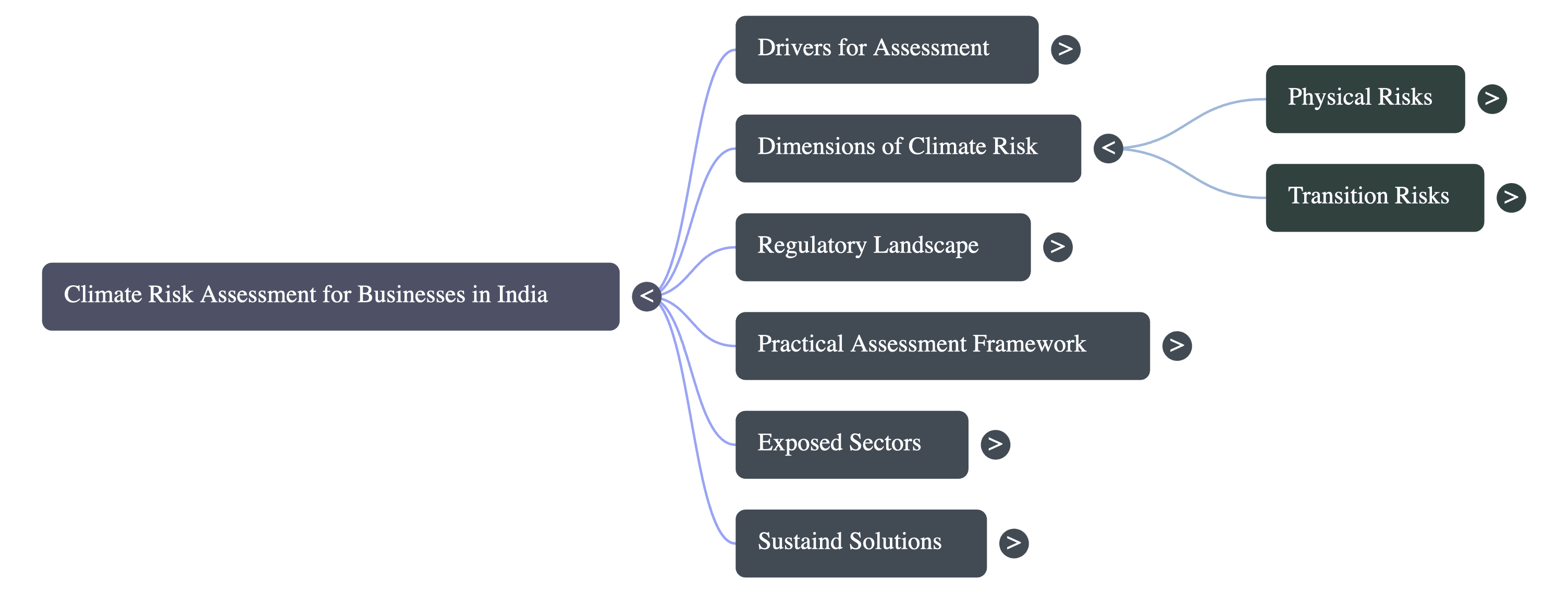
A robust climate risk assessment typically evaluates two interconnected categories:
-
Physical Risks: These include acute events such as cyclones, floods, and extreme rainfall, as well as chronic shifts like rising average temperatures, sea-level rise, and prolonged droughts. For Indian manufacturers, logistics providers, and agribusinesses, physical risks can disrupt operations, damage infrastructure, and reduce workforce productivity — particularly during summer months when wet-bulb temperatures in parts of India already breach safe working thresholds. Physical Risks: These include acute events such as cyclones, floods, and extreme rainfall, as well as chronic shifts like rising average temperatures, sea-level rise, and prolonged droughts. For Indian manufacturers, logistics providers, and agribusinesses, physical risks can disrupt operations, damage infrastructure, and reduce workforce productivity — particularly during summer months when wet-bulb temperatures in parts of India already breach safe working thresholds.
-
Transition Risks: These stem from the systemic shift towards a greener economy. Carbon pricing mechanisms, tightened emissions regulations, evolving customer preferences, and the rise of green finance all represent forces that can erode the value of carbon-intensive assets while simultaneously creating opportunities for forward-looking businesses. Understanding where your organisation sits on this spectrum is essential for strategic planning. Transition Risks: These stem from the systemic shift towards a greener economy. Carbon pricing mechanisms, tightened emissions regulations, evolving customer preferences, and the rise of green finance all represent forces that can erode the value of carbon-intensive assets while simultaneously creating opportunities for forward-looking businesses. Understanding where your organisation sits on this spectrum is essential for strategic planning.
India's Regulatory Landscape: The Push Towards Mandatory Disclosure
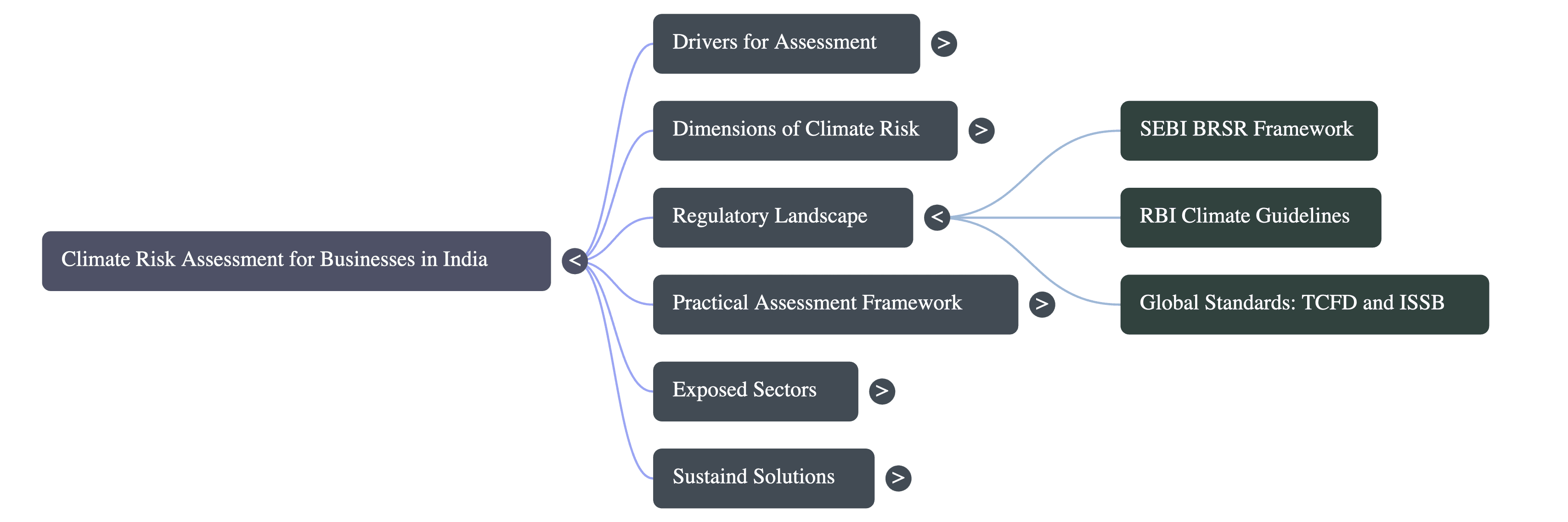
India's regulatory environment is evolving at pace. The Securities and Exchange Board of India (SEBI) introduced the Business Responsibility and Sustainability Reporting (BRSR) framework, which mandates listed companies to disclose environment-related risks and opportunities. The Reserve Bank of India (RBI) has also issued guidelines encouraging banks and financial institutions to integrate climate risk into their credit assessment processes.
Globally, frameworks such as the Task Force on Climate-related Financial Disclosures (TCFD) and the International Sustainability Standards Board (ISSB) standards are increasingly being referenced by institutional investors evaluating Indian companies. Businesses that align their climate risk assessments with these frameworks not only meet regulatory expectations but also communicate credibility to global capital markets.
How to Conduct a Climate Risk Assessment: A Practical Framework
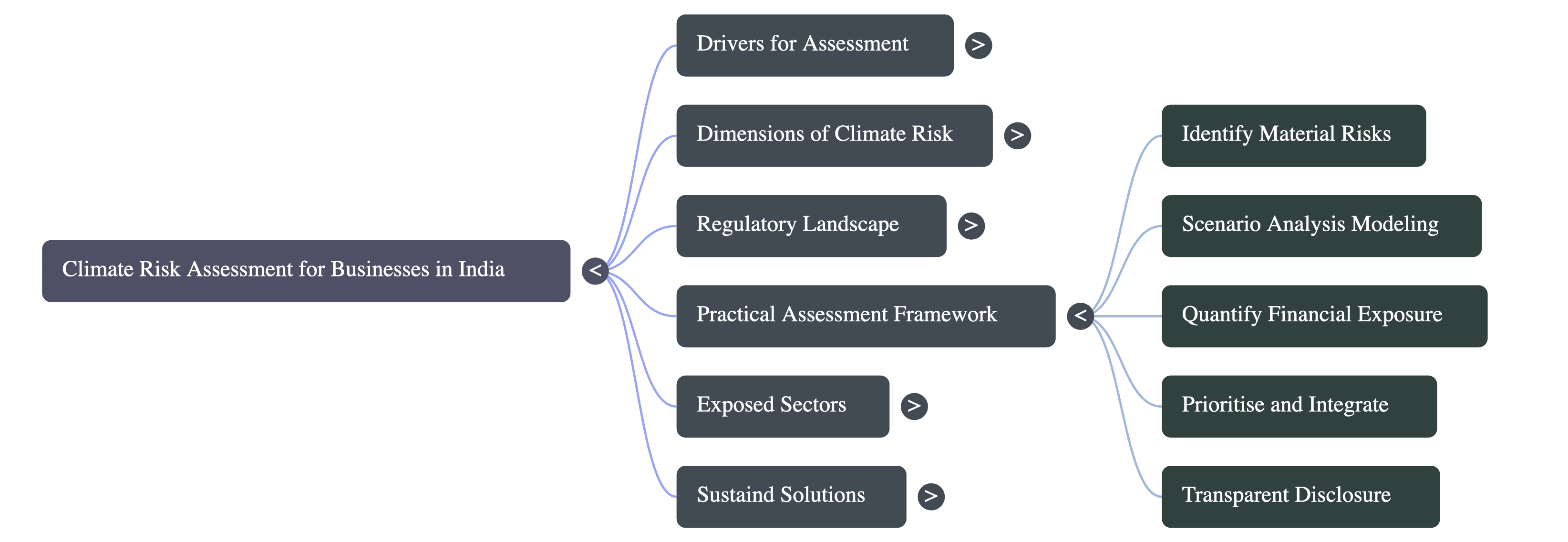
Effective climate risk assessment follows a structured, data-driven process. Here is how leading Indian businesses approach it:
-
Identify material risks: Map your value chain — from raw material sourcing to product delivery and identify where climate hazards could create financial or operational disruptions. Identify material risks: Map your value chain — from raw material sourcing to product delivery and identify where climate hazards could create financial or operational disruptions.
-
Use scenario analysis: Model how your business performs under different climate trajectories for instance, a 1.5°C warming scenario versus a 3°C scenario. This reveals which risks are manageable and which require urgent strategic pivots. Use scenario analysis: Model how your business performs under different climate trajectories for instance, a 1.5°C warming scenario versus a 3°C scenario. This reveals which risks are manageable and which require urgent strategic pivots.
-
Quantify financial exposure: Translate identified risks into financial terms — potential revenue loss, asset write-downs, increased insurance premiums, or capital expenditure for adaptation measures. Quantify financial exposure: Translate identified risks into financial terms — potential revenue loss, asset write-downs, increased insurance premiums, or capital expenditure for adaptation measures.
-
Prioritise and integrate: Rank risks by likelihood and severity, and embed findings into enterprise risk management (ERM) systems, board-level reporting, and long-term capital planning. Prioritise and integrate: Rank risks by likelihood and severity, and embed findings into enterprise risk management (ERM) systems, board-level reporting, and long-term capital planning.
-
Disclose transparently: Publish findings in alignment with BRSR, TCFD, or ISSB standards to build investor confidence and meet regulatory requirements. Disclose transparently: Publish findings in alignment with BRSR, TCFD, or ISSB standards to build investor confidence and meet regulatory requirements.
Sector Spotlight: Industries Most Exposed in India
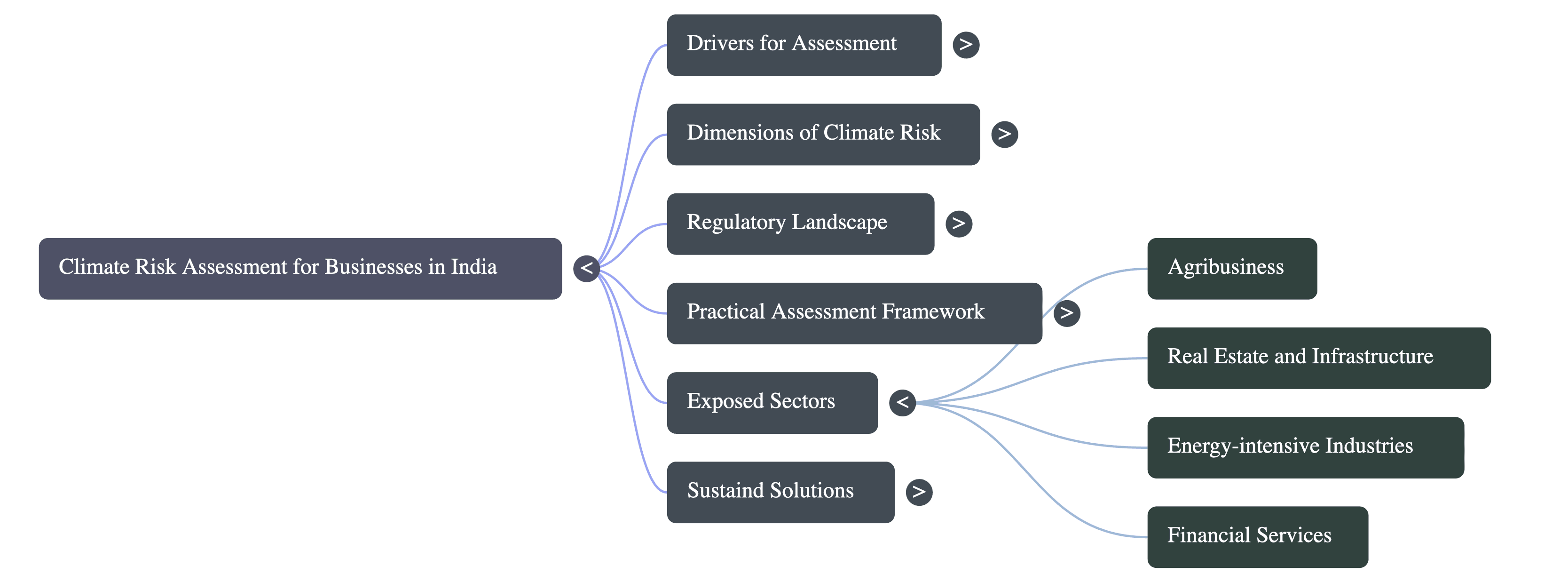
While every sector faces some degree of climate exposure, certain industries in India face disproportionate risk. The agriculture and food processing sectors are acutely vulnerable to monsoon variability and heat stress. Real estate and infrastructure developers in coastal cities such as Mumbai and Chennai must grapple with flood risk and sea-level rise. Energy-intensive sectors — steel, cement, textiles, and chemicals — face growing transition risk as India's carbon market matures and energy costs rise. Even the financial services sector is exposed through its lending portfolios and investment positions in climate-sensitive industries.
Understanding sector-specific risk profiles allows businesses to benchmark themselves against peers, identify gaps in their resilience strategies, and make the case internally for climate-focused investment.
How Sustaind Supports Climate Risk Assessment for Indian Businesses
At Sustaind, we believe that sustainability and business resilience are two sides of the same coin. Our climate risk assessment services are designed specifically for the Indian context — combining global frameworks with ground-level knowledge of local regulatory requirements, climate data, and industry dynamics.
Whether you are a mid-sized manufacturer seeking to understand your physical risk exposure, a listed company preparing your BRSR disclosure, or a board looking to embed climate into strategic planning, Sustaind provides the expertise, tools, and frameworks to get there. Our approach is transparent, data-driven, and tailored — ensuring that your climate risk assessment translates into actionable intelligence, not just a compliance document.
The Time to Act Is Now
The climate crisis is not a future scenario — it is unfolding in real time across Indian boardrooms, supply chains, and balance sheets. Businesses that delay climate risk assessment risk being caught off-guard by regulatory mandates, investor scrutiny, and physical disruptions. Those that act now gain a strategic advantage: better-informed decisions, stronger investor relations, and a more resilient business model.
The question is not whether climate risk will affect your business — it is whether you will be ready when it does. Partner with Sustaind to ensure the answer is yes.
- Climate Risk Assessment
- Climate Risk Assessment