
- Climate Risk Assessment
- Sustainability Service As climate-related disruptions grow more frequent and financially consequential, organisations across India are recognising that sustainability is no longer a peripheral concern — it sits at the heart of long-term business strategy. Climate risk assessment service consulting in Gurugram is emerging as a critical need for companies headquartered in India's premier corporate hub, where global investors, regulatory bodies, and supply chain partners are all asking the same question: are you prepared for a climate-constrained future? At Sustaind, we help businesses answer that question with precision, clarity, and actionable strategy.
What Is Climate Risk Assessment — and Why Does It Matter Now?
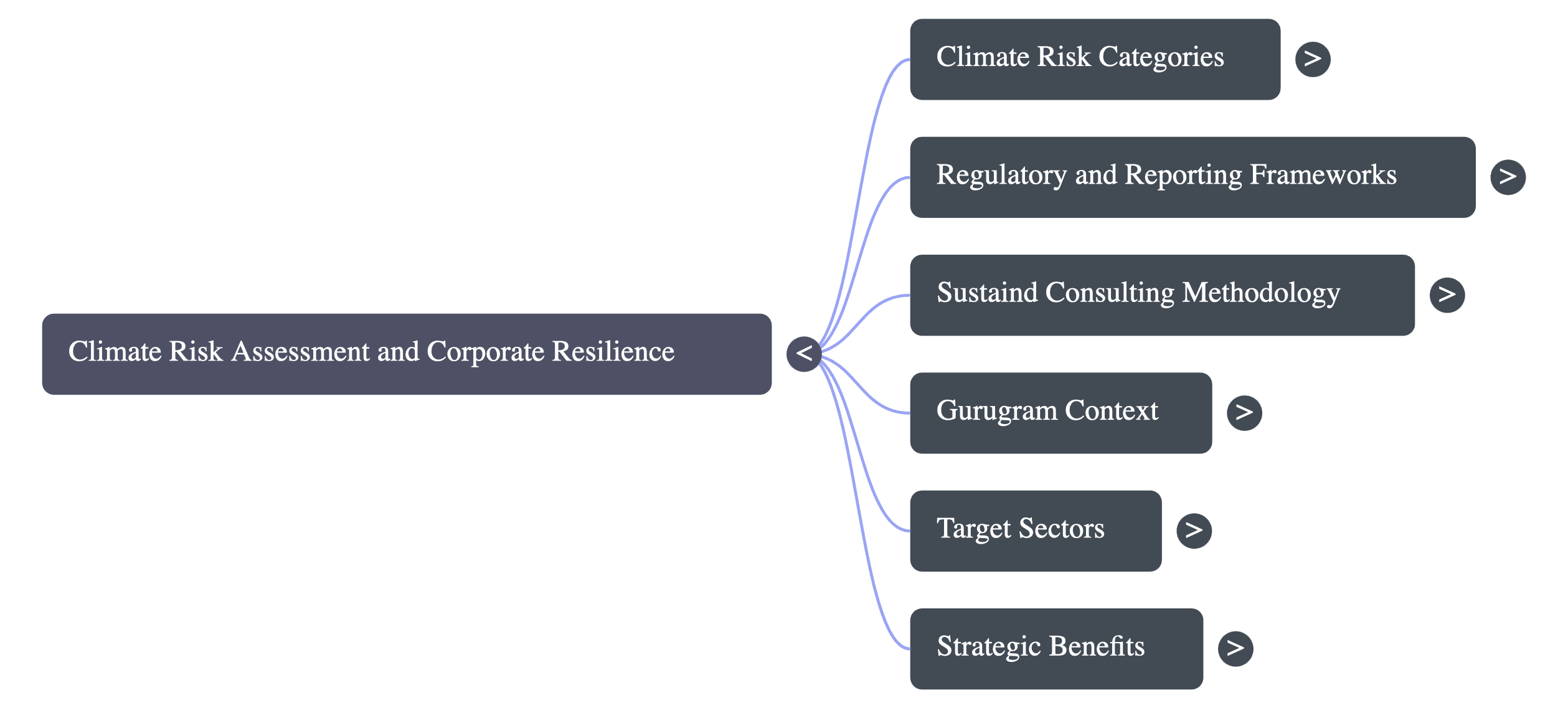
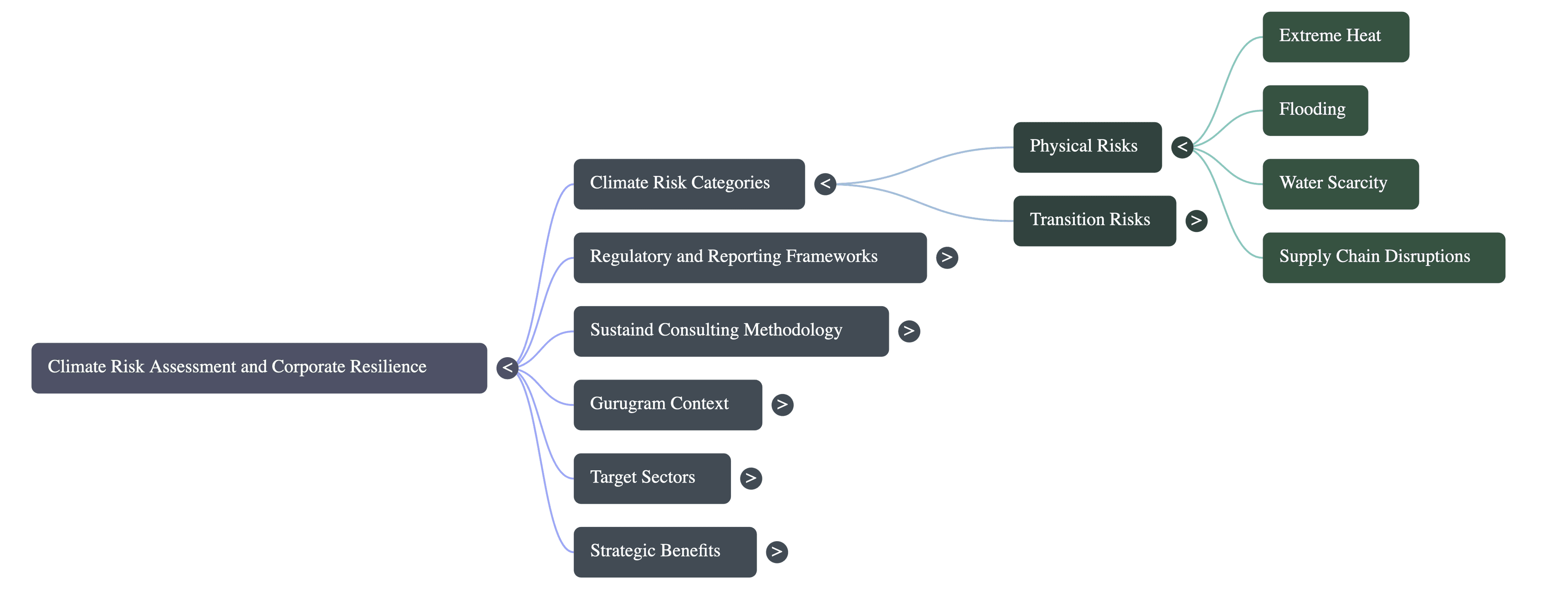
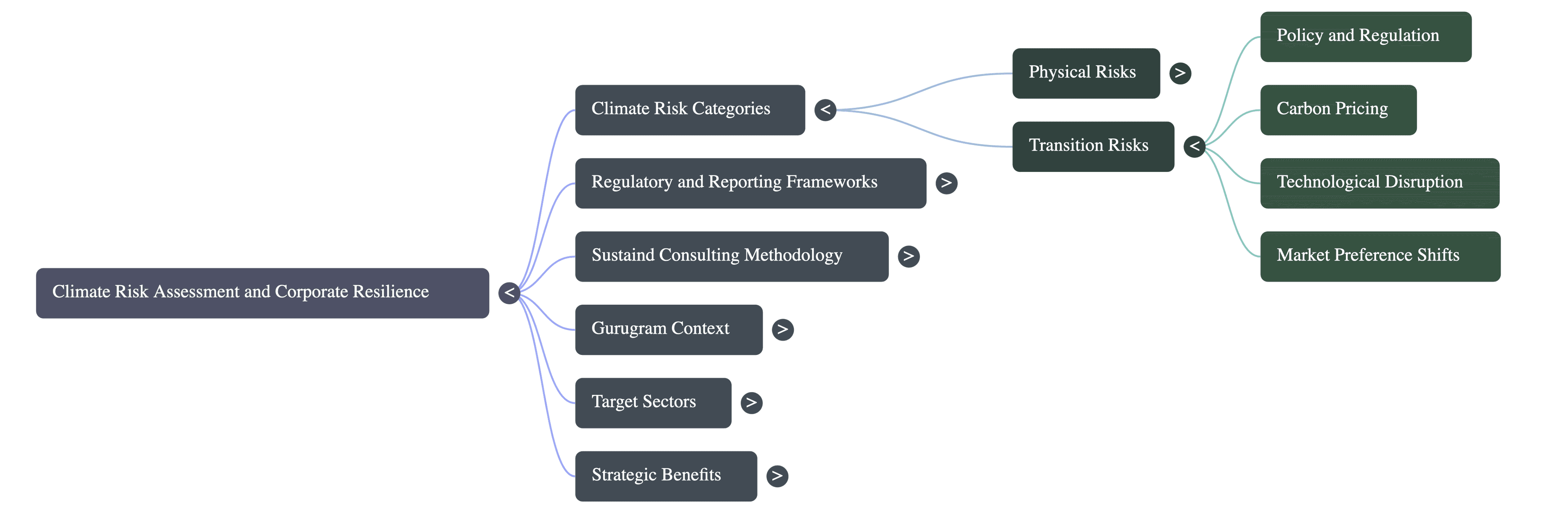
Climate risk assessment is the structured process of identifying, evaluating, and quantifying the risks that climate change poses to a business — and equally, the opportunities it may unlock. These risks are broadly categorised into two types: physical risks and transition risks.
Physical risks refer to the direct impacts of a changing climate — extreme heat events, flooding, water scarcity, and supply chain disruptions caused by increasingly erratic weather. For companies operating in or sourcing from climate-vulnerable regions across India, these are not hypothetical scenarios but near-term operational realities.
Transition risks arise from the global shift toward a low-carbon economy. These include policy changes such as carbon pricing and tighter environmental regulation, technological disruption as cleaner alternatives replace carbon-intensive processes, and shifting market preferences as investors and consumers increasingly favour sustainable businesses. Companies that fail to account for transition risk face asset stranding, reputational damage, and reduced access to capital.
The urgency is compounded by evolving regulatory requirements. India's SEBI-mandated Business Responsibility and Sustainability Reporting (BRSR) framework now requires the top 1,000 listed companies to disclose climate-related information. Meanwhile, global frameworks such as TCFD (Task Force on Climate-related Financial Disclosures), ISSB standards, and CSRD in Europe are reshaping how companies must report climate exposure to international investors.
Gurugram's Corporate Landscape and the Climate Imperative
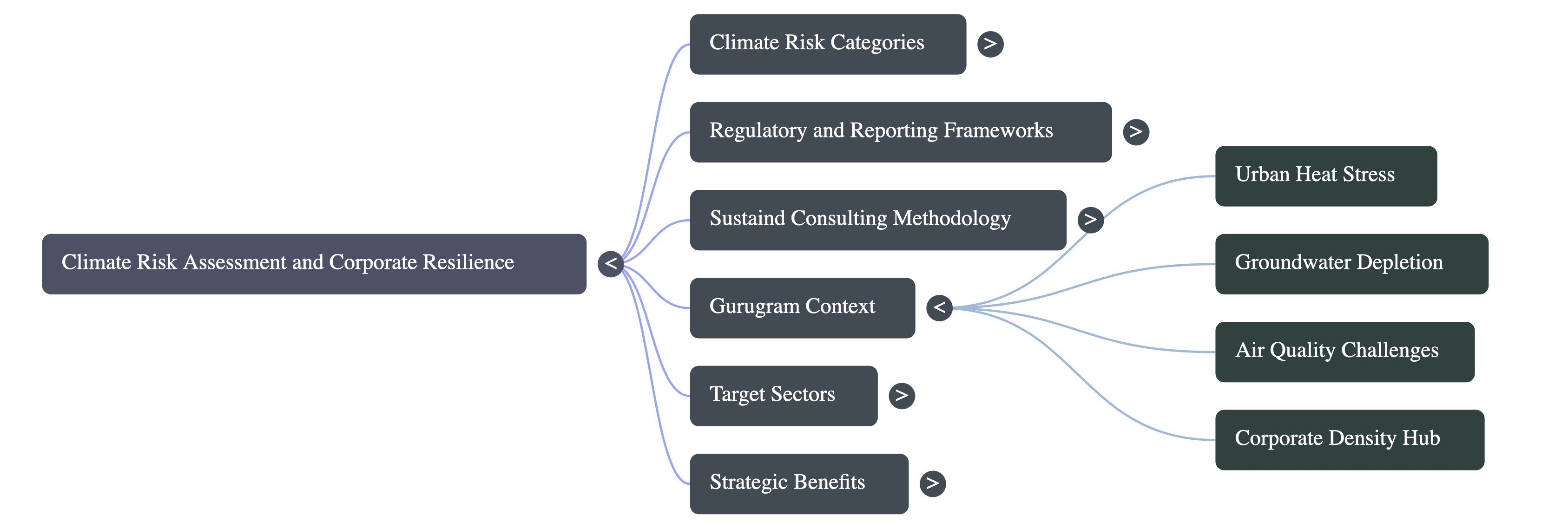
Gurugram is home to the Indian headquarters of some of the world's largest multinationals, a thriving startup ecosystem, and a dense network of mid-market enterprises operating across manufacturing, real estate, financial services, logistics, and professional services. This unique corporate density makes Gurugram both a hub of climate risk exposure and a centre of opportunity for businesses that move early on sustainability strategy.
Companies in the NCR region face rising urban heat stress, groundwater depletion, and air quality challenges that directly affect workforce productivity, insurance costs, and facility operations. At the same time, many Gurugram-based firms have international investors or export relationships that require them to meet global ESG disclosure standards. Navigating this dual pressure — local physical risk and global reporting expectations — requires specialised expertise.
Sustaind's Approach to Climate Risk Assessment Consulting
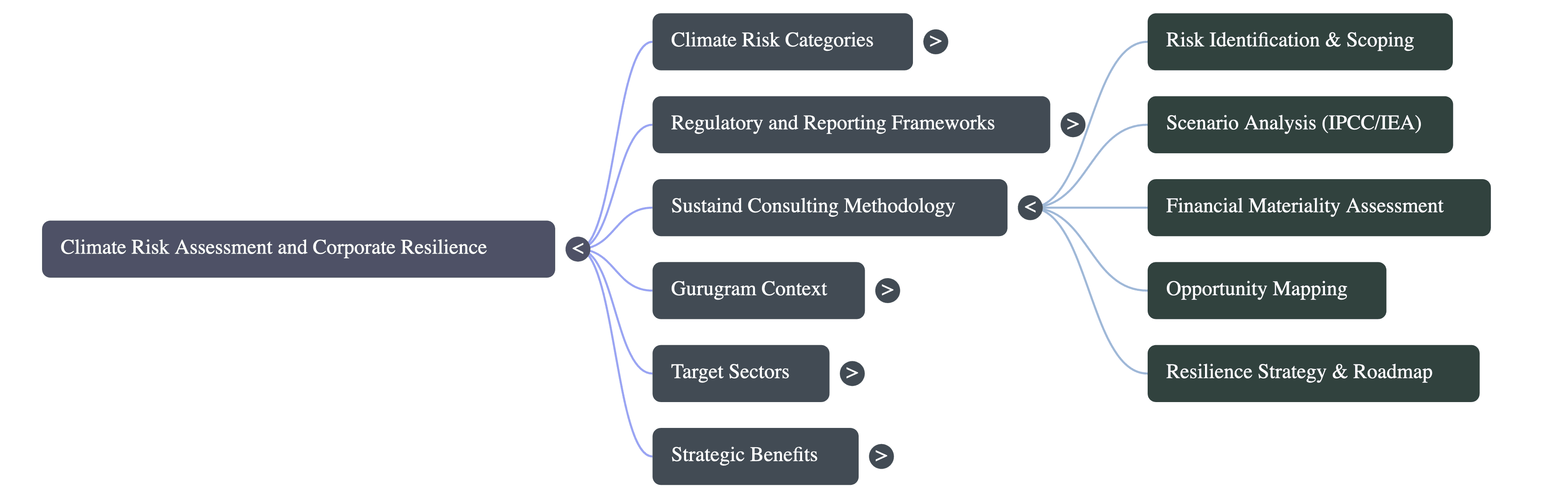
At Sustaind, we take a structured, science-aligned approach to climate risk assessment that integrates seamlessly with your existing business operations and financial planning cycles. Our consulting methodology is built around five core stages:
-
Risk Identification & Scoping: We begin by mapping your business model, value chain, and geographic footprint against known climate hazards. This includes physical risk screening for acute and chronic climate events relevant to your operating locations, and transition risk mapping across policy, technology, and market dimensions. Risk Identification & Scoping: We begin by mapping your business model, value chain, and geographic footprint against known climate hazards. This includes physical risk screening for acute and chronic climate events relevant to your operating locations, and transition risk mapping across policy, technology, and market dimensions.
-
Scenario Analysis: Using globally recognised scenarios — including those from the Intergovernmental Panel on Climate Change (IPCC) and the International Energy Agency (IEA) — we model how different climate futures could affect your revenue, costs, assets, and supply chains. This helps leadership make decisions that are robust across a range of possible futures, not just a single assumed trajectory. Scenario Analysis: Using globally recognised scenarios — including those from the Intergovernmental Panel on Climate Change (IPCC) and the International Energy Agency (IEA) — we model how different climate futures could affect your revenue, costs, assets, and supply chains. This helps leadership make decisions that are robust across a range of possible futures, not just a single assumed trajectory.
-
Financial Materiality Assessment: We quantify the financial impact of identified risks, helping you determine which risks are material enough to warrant disclosure, capital allocation, or operational changes. This output is directly usable in BRSR Core reporting, TCFD-aligned disclosures, and investor-facing sustainability communications. Financial Materiality Assessment: We quantify the financial impact of identified risks, helping you determine which risks are material enough to warrant disclosure, capital allocation, or operational changes. This output is directly usable in BRSR Core reporting, TCFD-aligned disclosures, and investor-facing sustainability communications.
-
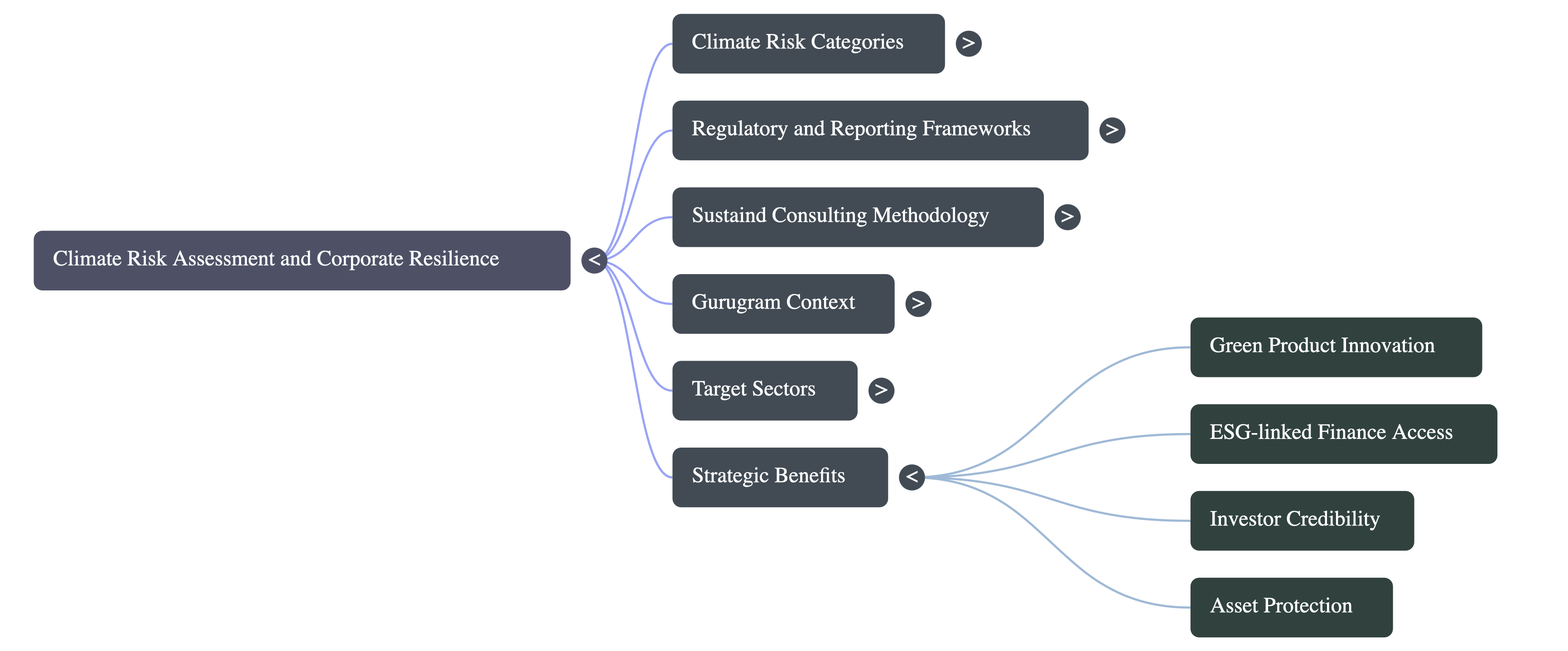
Opportunity Mapping: Climate change is not only a source of risk — it also creates genuine business opportunities. From green product innovation to sustainable procurement advantages and access to ESG-linked finance, we help you identify where the transition economy creates strategic headroom for your business. Opportunity Mapping: Climate change is not only a source of risk — it also creates genuine business opportunities. From green product innovation to sustainable procurement advantages and access to ESG-linked finance, we help you identify where the transition economy creates strategic headroom for your business.
-
Resilience Strategy & Roadmap: We translate our findings into a prioritised action plan: infrastructure adaptations, supplier diversification, energy transition targets, and disclosure timelines — all calibrated to your organisational capacity and stakeholder expectations. Resilience Strategy & Roadmap: We translate our findings into a prioritised action plan: infrastructure adaptations, supplier diversification, energy transition targets, and disclosure timelines — all calibrated to your organisational capacity and stakeholder expectations.
Globally Aligned, India-Contextualised Frameworks
Our climate risk assessments are anchored in leading international frameworks — TCFD, GRI, ISSB (IFRS S2), and SASB — while being grounded in the practical realities of the Indian regulatory environment. Whether you are preparing for BRSR Core compliance, responding to investor ESG due diligence, or building a CSRD-ready disclosure for European business relationships, Sustaind provides the expertise to align your reporting with what global stakeholders actually expect.
We also assist clients navigating emerging mechanisms such as carbon border adjustments (CBAM) and voluntary carbon markets, ensuring that climate risk strategy and commercial positioning evolve together.
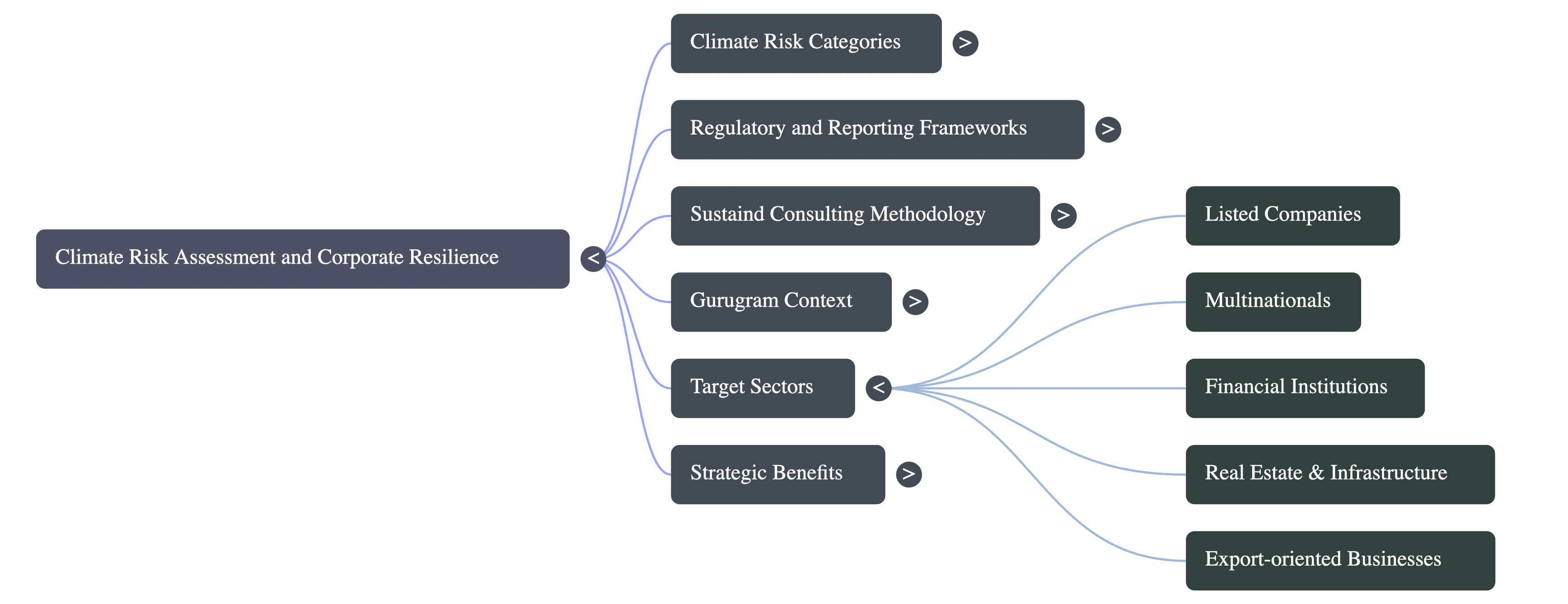
Sustaind works with a wide range of organisations — from growth-stage companies embedding ESG into their business model for the first time, to established listed firms strengthening their BRSR disclosures and investor communications. We are particularly well-suited to serve:
-
Mid-market and unlisted companies building ESG capabilities ahead of regulatory mandates Mid-market and unlisted companies building ESG capabilities ahead of regulatory mandates
-
Multinationals with India operations that need locally contextualised climate risk data Multinationals with India operations that need locally contextualised climate risk data
-
Financial institutions and investors conducting ESG due diligence on portfolio companies Financial institutions and investors conducting ESG due diligence on portfolio companies
-
Real estate and infrastructure developers assessing long-term physical climate exposure Real estate and infrastructure developers assessing long-term physical climate exposure
-
Export-oriented businesses responding to the climate risk expectations of international buyers and supply chain partners Export-oriented businesses responding to the climate risk expectations of international buyers and supply chain partners
Why Choose Sustaind for Climate Risk Consulting in Gurugram?
Sustaind is not a large generalist firm offering sustainability as a side service — climate and ESG consulting is our core focus. This means you work with specialists who combine deep technical knowledge of climate science and ESG frameworks with an understanding of India's business environment and regulatory trajectory. We provide senior-level engagement throughout every project, not a junior team working off a template.
Our outputs are designed to be genuinely useful — for your board, your investors, your lenders, and your leadership team — rather than compliance documents that sit in a drawer. We combine rigorous analysis with clear, accessible communication so that climate risk becomes a live input into strategic decision-making across your organisation.
Take the First Step Toward Climate Resilience
Climate risk is not a future problem — it is already embedded in your assets, your supply chains, and your investor relationships. The question for Gurugram's business leaders is not whether to engage with climate risk, but how quickly and strategically to do so.
Sustaind is ready to help. Reach out to our team at sustaind to schedule a discovery conversation and learn how our climate risk assessment services can help your organisation build a more resilient, credible, and future-ready business.
- Sustainability Consultant
- Climate Risk Assessment
- Climate Risk Assessment