

- Climate Risk Assessment
- Sustainability Service Understanding what is ESG Score and how it is calculated has become essential knowledge for investors, corporate leaders, and sustainability professionals navigating today's rapidly evolving financial landscape. An ESG Score is a quantitative measure that evaluates a company's performance across three critical dimensions — Environmental, Social, and Governance — offering stakeholders a structured way to assess non-financial risks and opportunities. Far from being a niche metric, ESG scores now influence trillion-dollar investment decisions, shape corporate strategies, and increasingly determine a company's social license to operate. In this article, we'll break down what ESG scores really mean, how they're constructed, and why they matter more than ever.
What Does ESG Stand For?
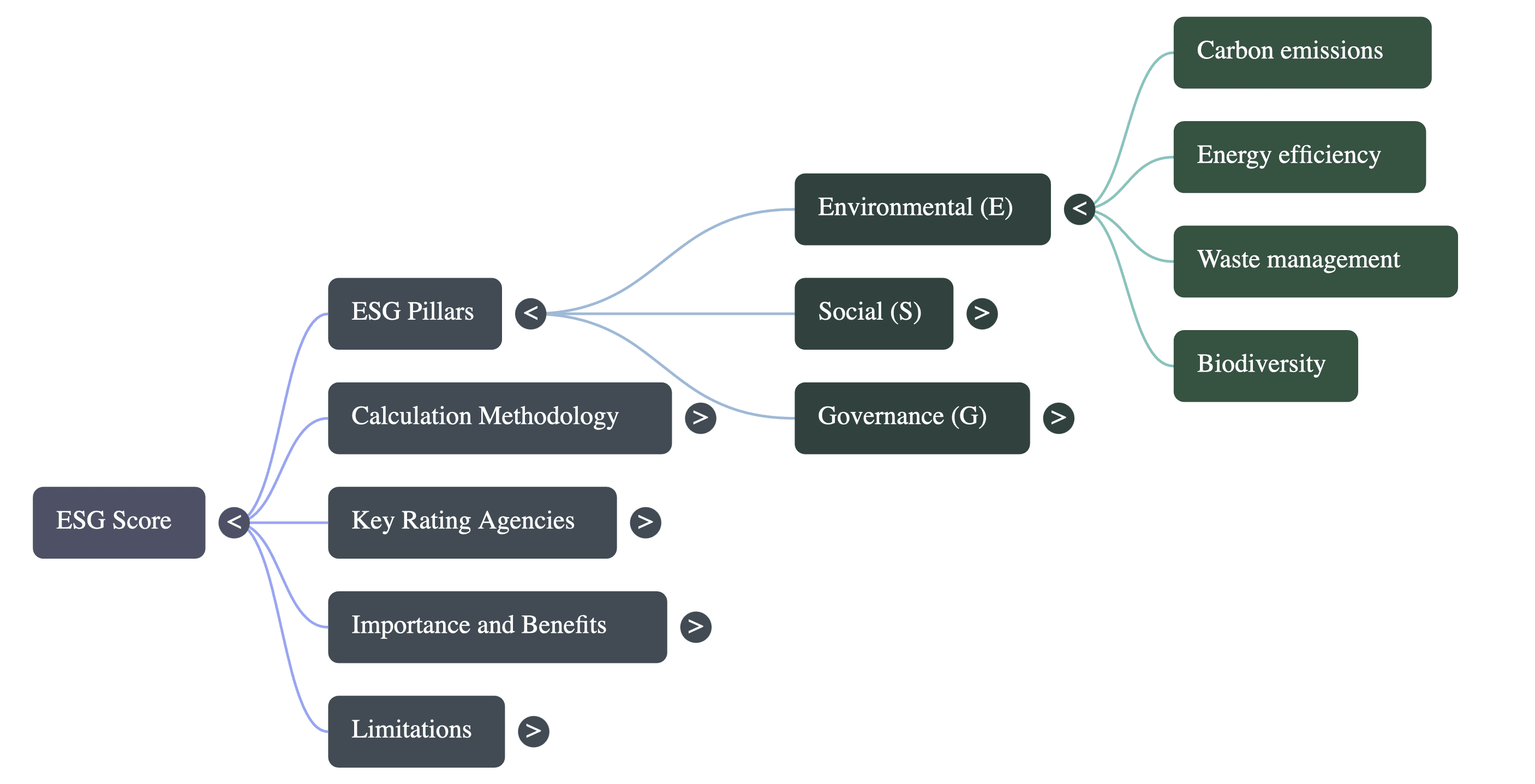
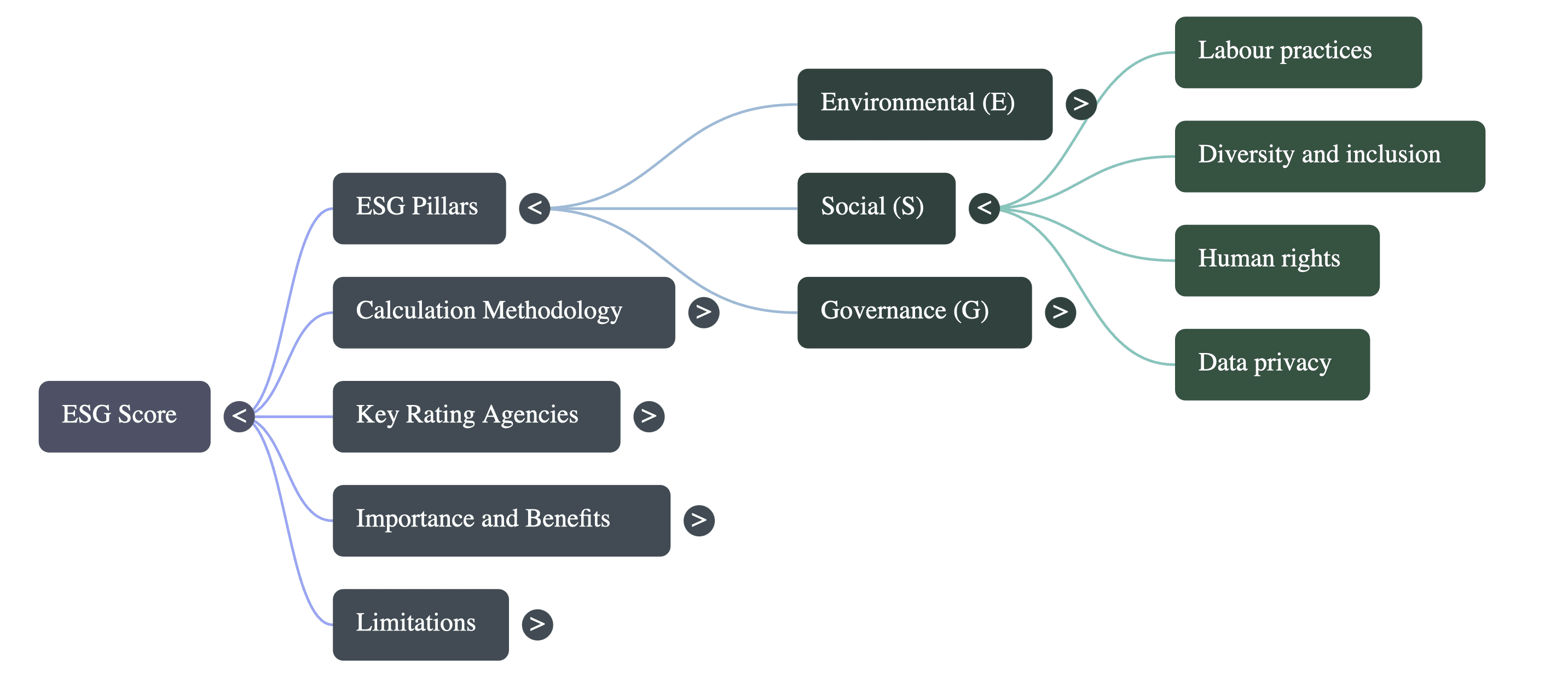
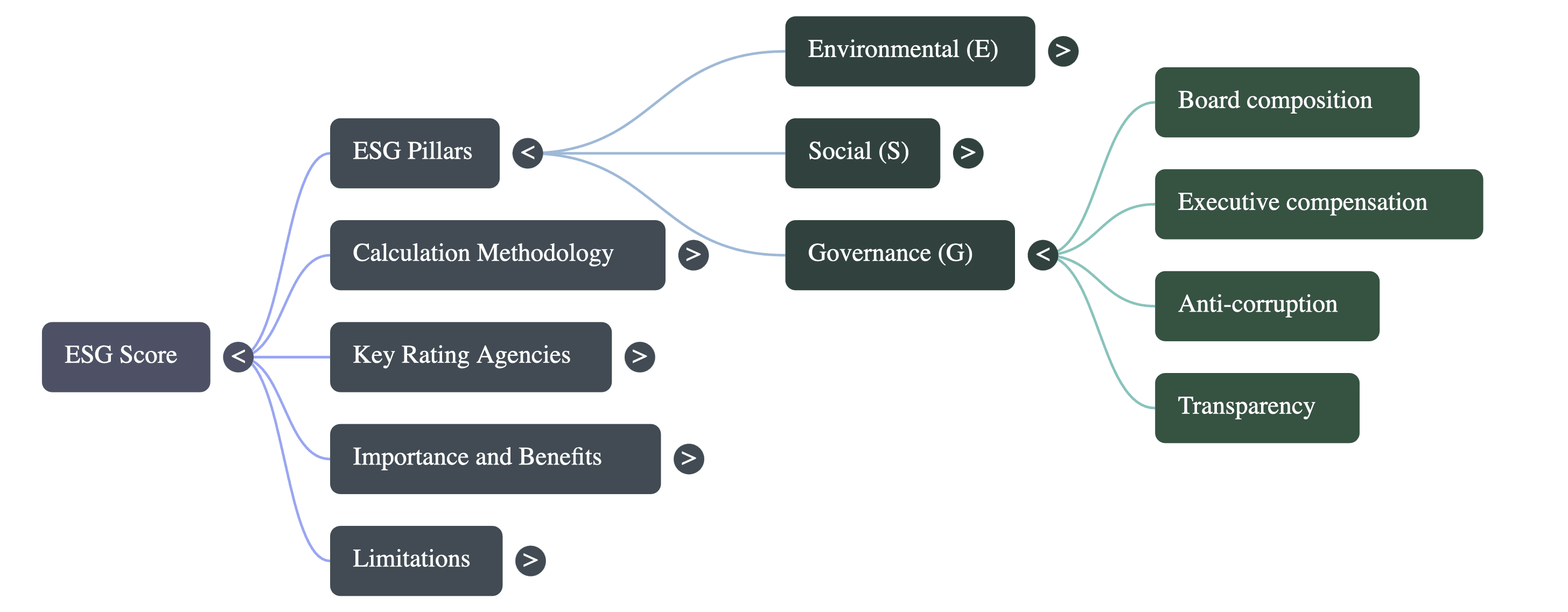
ESG is an acronym that stands for Environmental, Social, and Governance. Each pillar captures a distinct category of corporate behaviour:
How a company interacts with the natural world. This includes carbon emissions, energy efficiency, water usage, waste management, biodiversity impact, and climate-related risks.
How a company manages relationships with its employees, suppliers, customers, and the communities where it operates. Key indicators include labour practices, workplace safety, diversity and inclusion, human rights compliance, and data privacy.
How a company is led and controlled. This encompasses board composition, executive compensation, shareholder rights, anti-corruption policies, transparency, and regulatory compliance.
Together, these three pillars provide a holistic lens through which to evaluate corporate responsibility and long-term sustainability — going well beyond what traditional financial statements can reveal.
What Is an ESG Score?
An ESG Score is a numerical rating — typically ranging from 0 to 100 — that aggregates a company's performance across the three ESG pillars into a single, comparable figure. Higher scores generally indicate stronger sustainability practices and lower exposure to ESG-related risks.
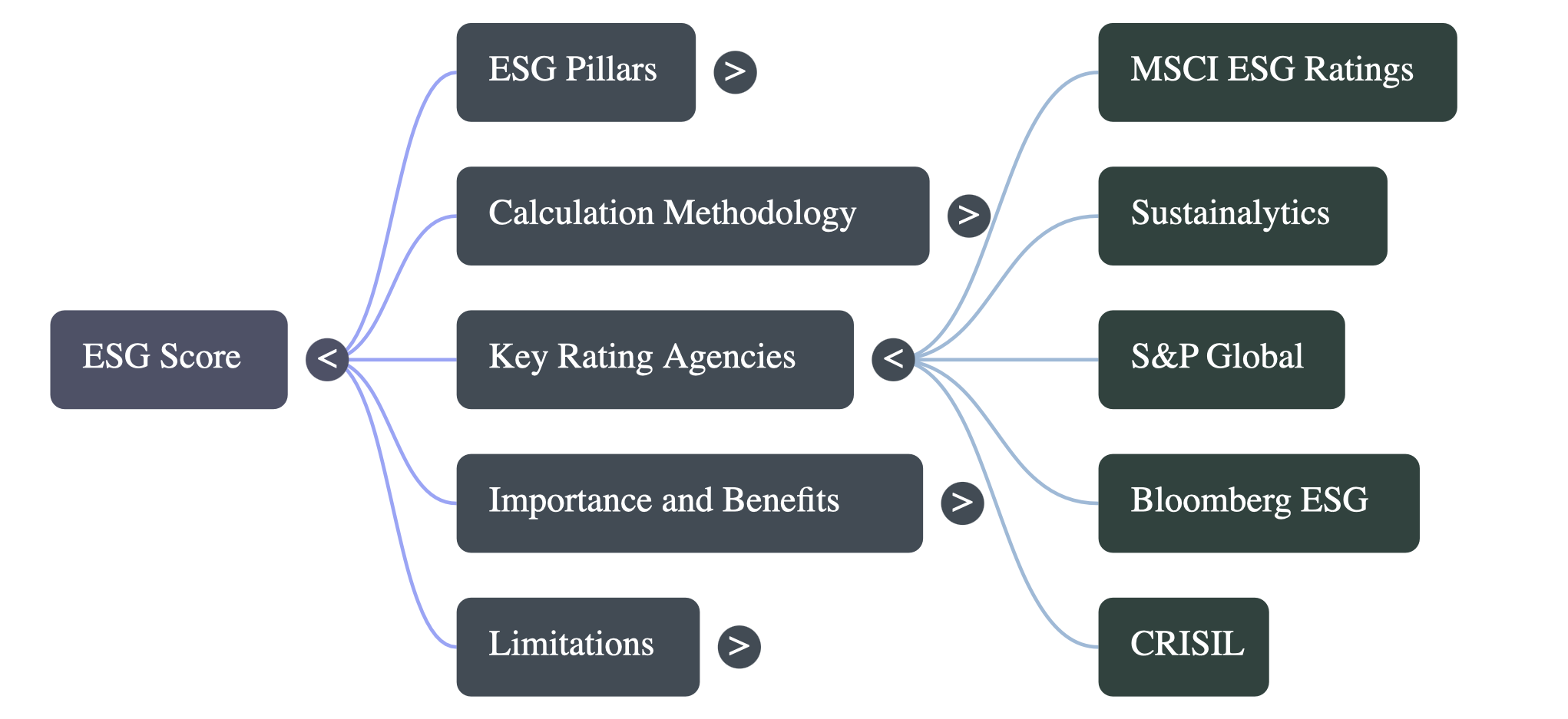
These scores are produced by specialised ESG rating agencies such as MSCI ESG Ratings, Sustain alytics, S&P Global ESG Scores, Bloomberg ESG, and CRISIL (prominent in the Indian context). Each agency uses its own proprietary methodology, which means scores can vary significantly across providers for the same company — a nuance that sophisticated investors must always keep in mind.
ESG scores serve multiple purposes:
-
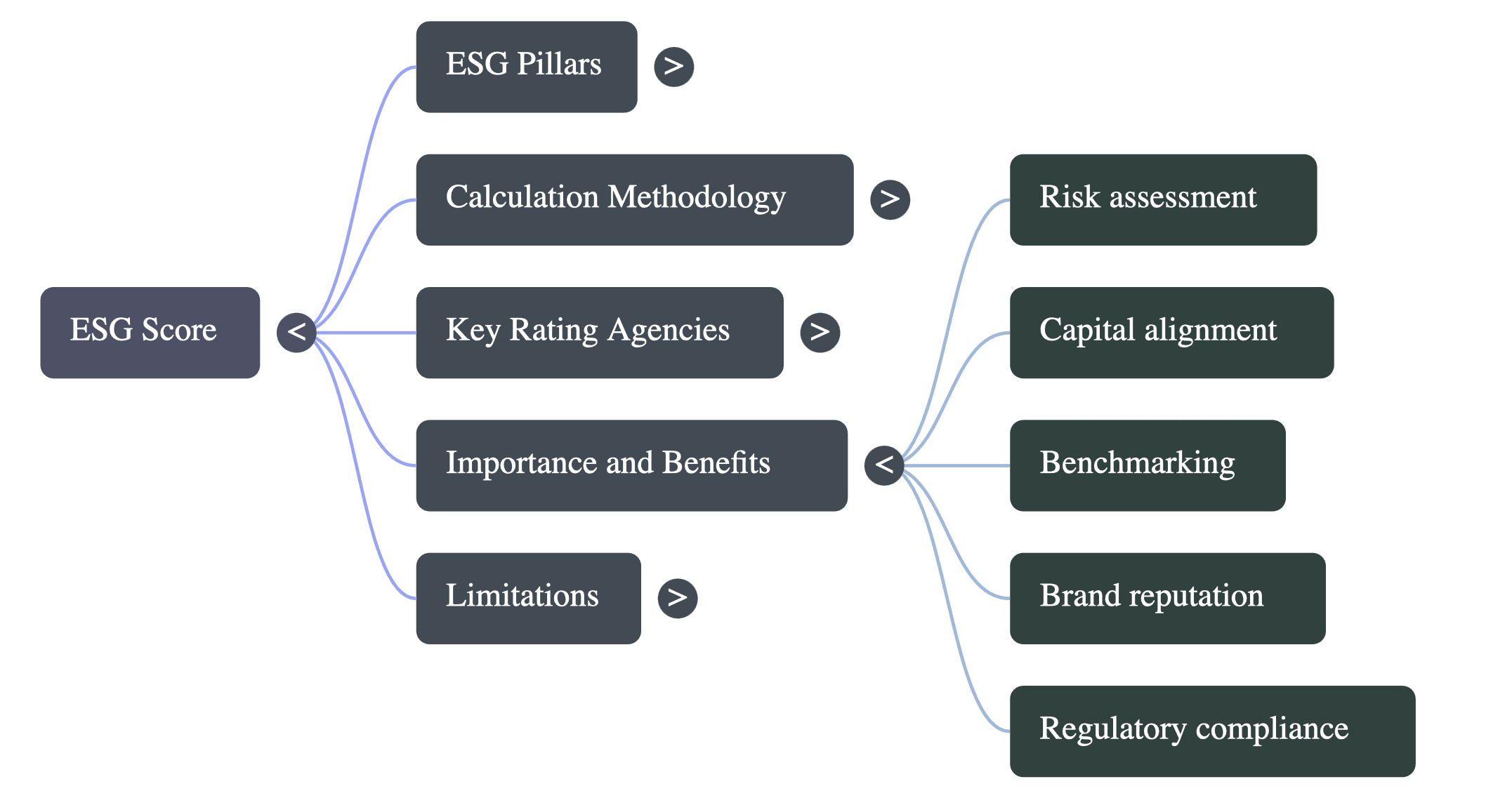
They help investors screen portfolios for sustainability risks and align capital with responsible companies. They help investors screen portfolios for sustainability risks and align capital with responsible companies.
-
They allow companies to benchmark their practices against industry peers. They allow companies to benchmark their practices against industry peers.
-
They assist regulators and policymakers in designing disclosure frameworks. They assist regulators and policymakers in designing disclosure frameworks.
-
They enable consumers and employees to make informed decisions about which organisations to support. They enable consumers and employees to make informed decisions about which organisations to support.
How Is an ESG Score Calculated?
The calculation of an ESG score is a multi-step process that combines quantitative data, qualitative assessments, and sector-specific weighting. Here's a step-by-step breakdown of the general methodology:
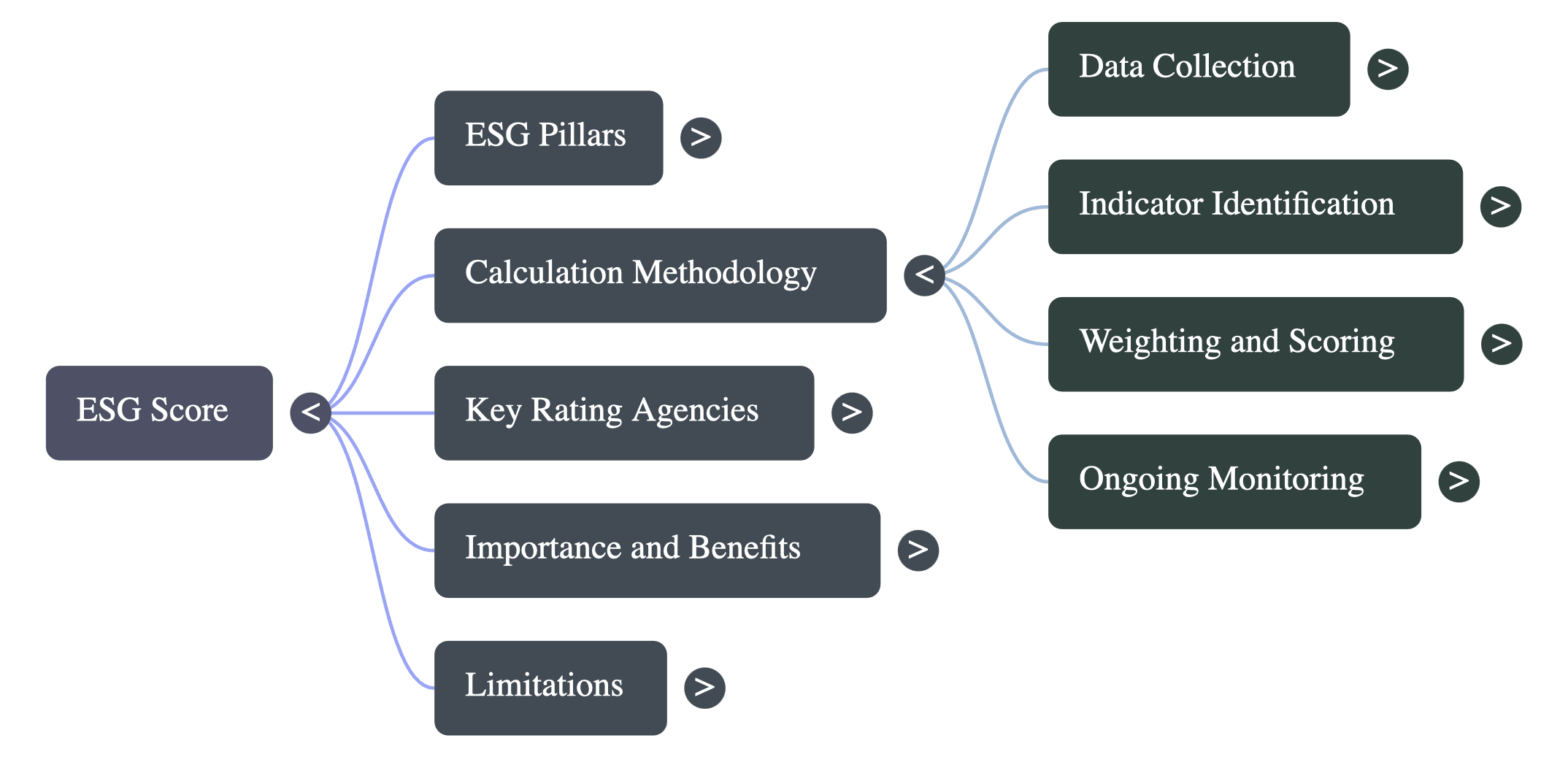
Rating agencies begin by collecting vast amounts of data from multiple sources:
-
Company disclosures: Annual reports, sustainability reports, integrated reports, and regulatory filings (such as BRSR filings mandated by SEBI in India). Company disclosures: Annual reports, sustainability reports, integrated reports, and regulatory filings (such as BRSR filings mandated by SEBI in India).
-
Public databases: Government records, legal filings, patent databases. Public databases: Government records, legal filings, patent databases.
-
Third-party sources: News media, NGO reports, academic research, and satellite data for environmental metrics. Third-party sources: News media, NGO reports, academic research, and satellite data for environmental metrics.
-
Direct surveys: Some agencies send detailed questionnaires to companies to supplement disclosed information. Direct surveys: Some agencies send detailed questionnaires to companies to supplement disclosed information.
Data quality and availability are major challenges here. Companies that disclose more tend to score better, which is itself an incentive to improve transparency.
2. Indicator Identification
Each pillar is broken down into dozens of specific indicators or sub categories For example:
-
Under Environmental, indicators might include Scope 1, 2, and 3 greenhouse gas emissions, renewable energy usage, water intensity, and deforestation risk. Under Environmental, indicators might include Scope 1, 2, and 3 greenhouse gas emissions, renewable energy usage, water intensity, and deforestation risk.
-
Under Social, indicators could include employee turnover rates, gender pay gap, injury frequency rates, and community investment spending. Under Social, indicators could include employee turnover rates, gender pay gap, injury frequency rates, and community investment spending.
-
Under Governance, relevant metrics include board independence percentage, frequency of shareholder meetings, and the existence of anti-bribery policies. Under Governance, relevant metrics include board independence percentage, frequency of shareholder meetings, and the existence of anti-bribery policies.
The selection of indicators is guided by both universally applicable standards (like those from the GRI or SASB frameworks) and industry-specific materiality assessments.
3. Industry and Sector Weighting
Not all ESG factors carry equal weight across all industries. A materiality matrix determines which issues are most significant for a given sector.
-
For an oil and gas company, carbon emissions and environmental liability carry much greater weight. For an oil and gas company, carbon emissions and environmental liability carry much greater weight.
-
For a bank or financial institution, governance factors like risk management and data security dominate. For a bank or financial institution, governance factors like risk management and data security dominate.
-
For an apparel brand, social factors such as supply chain labour standards are paramount. For an apparel brand, social factors such as supply chain labour standards are paramount.
This sector-specific weighting ensures that ESG scores reflect the risks and opportunities that are genuinely material to each business model.
4. Scoring and Normalisation
Raw data is converted into scores using statistical models. Individual indicator scores are then normalised — typically against industry peers — so that a company is evaluated relative to comparable businesses, not against an absolute global standard. This peer-relative approach ensures fairness across sectors with inherently different sustainability profiles.
5. Aggregation into a Final Score
Weighted indicator scores are rolled up into sub-pillar scores, then into E, S, and G pillar scores, and finally into a composite ESG score. Some providers report the composite score; others report pillar-level scores separately to give more granular insight.
6. Ongoing Monitoring and Updates
ESG scores are not static. Rating agencies update scores periodically — often annually, but sometimes more frequently — to reflect new disclosures, incidents (such as environmental violations or governance scandals), and evolving assessment methodologies.
Limitations of ESG Scores
While ESG scores are valuable, they come with important caveats:
-
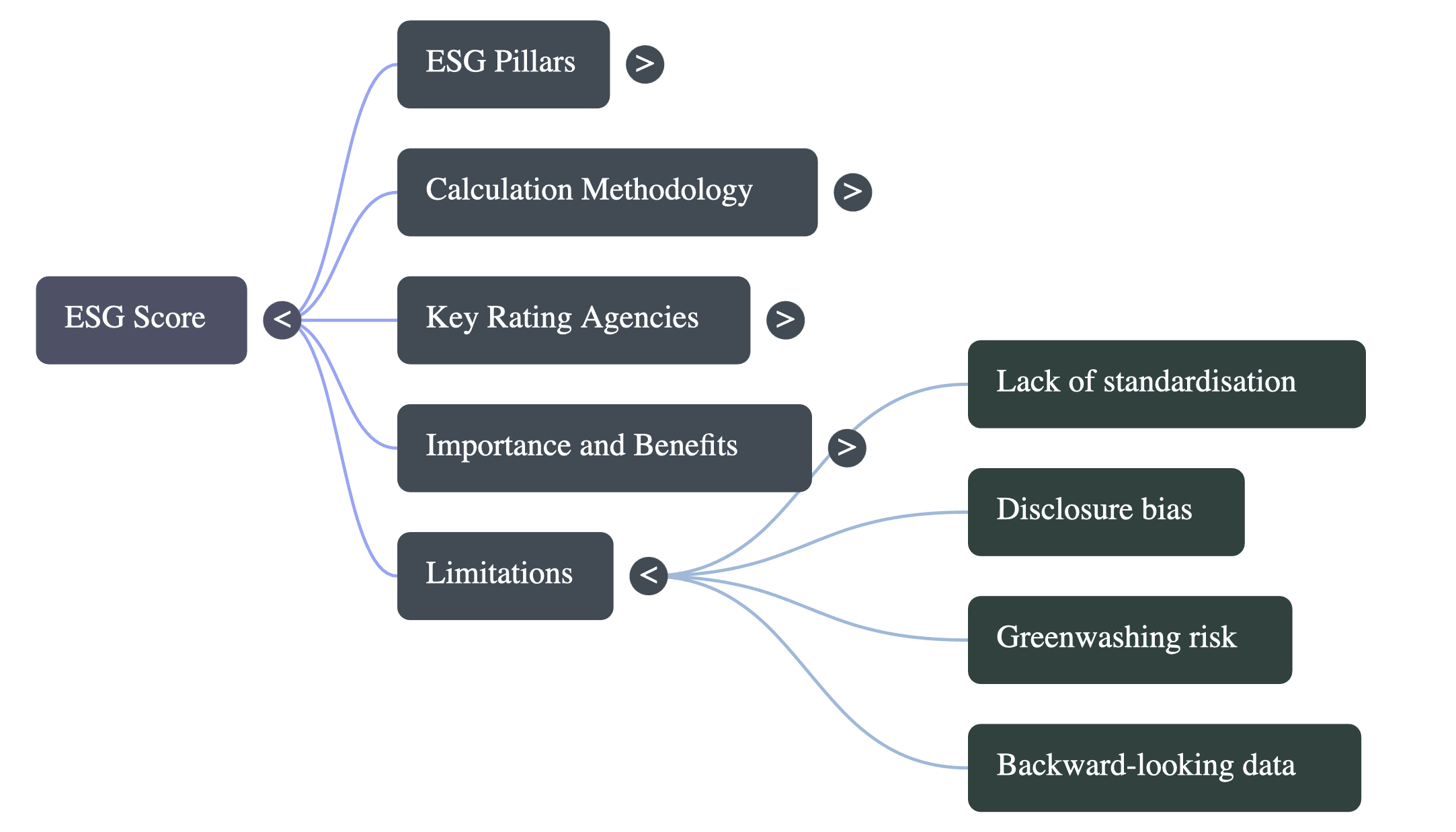
Lack of standardisation: Different agencies weigh factors differently, leading to divergent scores for the same company. Lack of standardisation: Different agencies weigh factors differently, leading to divergent scores for the same company.
-
Disclosure bias: Companies that communicate better may score higher regardless of actual performance. Disclosure bias: Companies that communicate better may score higher regardless of actual performance.
-
Greenwashing risk: A high ESG score does not automatically guarantee ethical or sustainable behaviour. Greenwashing risk: A high ESG score does not automatically guarantee ethical or sustainable behaviour.
-
Backward-looking data: Most scores rely on historical data and may not fully capture a company's current trajectory. Backward-looking data: Most scores rely on historical data and may not fully capture a company's current trajectory.
These limitations underscore the importance of using ESG scores as one input among many in investment or business decisions — not as a definitive verdict.
Why ESG Scores Matter in India
India's ESG ecosystem is evolving rapidly. The Securities and Exchange Board of India (SEBI) has mandated Business Responsibility and Sustainability Reporting (BRSR) for the top 1,000 listed companies, creating a structured data foundation for ESG assessments.
Domestic rating agencies like CRISIL and CARE Ratings now offer ESG ratings tailored to Indian market conditions, while global investors increasingly factor ESG performance into their decisions about investing in Indian equities and bonds.
For Indian businesses, a strong ESG score translates into better access to sustainable finance instruments such as green bonds and ESG-linked loans, improved brand reputation, and stronger stakeholder trust.
ESG scores have moved from the periphery to the centre of modern finance and corporate strategy. Understanding what an ESG score is and how it is calculated empowers investors to make more informed decisions, encourages companies to adopt more responsible practices, and ultimately drives capital towards a more sustainable future. While no scoring system is perfect, the growing rigour and transparency of ESG methodologies signal that sustainability performance is here to stay as a critical measure of corporate excellence.
- Sustainability Consultant