
- Climate Risk Assessment
- Sustainability Service Knowing how to buy carbon credits in India has never been more relevant — or more urgent. As climate commitments intensify and India's domestic carbon market takes shape, businesses and conscious individuals are waking up to the power of carbon credits as both an environmental and strategic tool. Whether you are a startup looking to achieve net-zero status, an enterprise navigating compliance requirements, or simply a citizen who wants to take meaningful climate action, understanding how this market works is the essential first step. At Sustaind, we believe sustainability should be accessible to everyone, and this guide is your clearest, most practical roadmap into India's evolving carbon credit ecosystem.
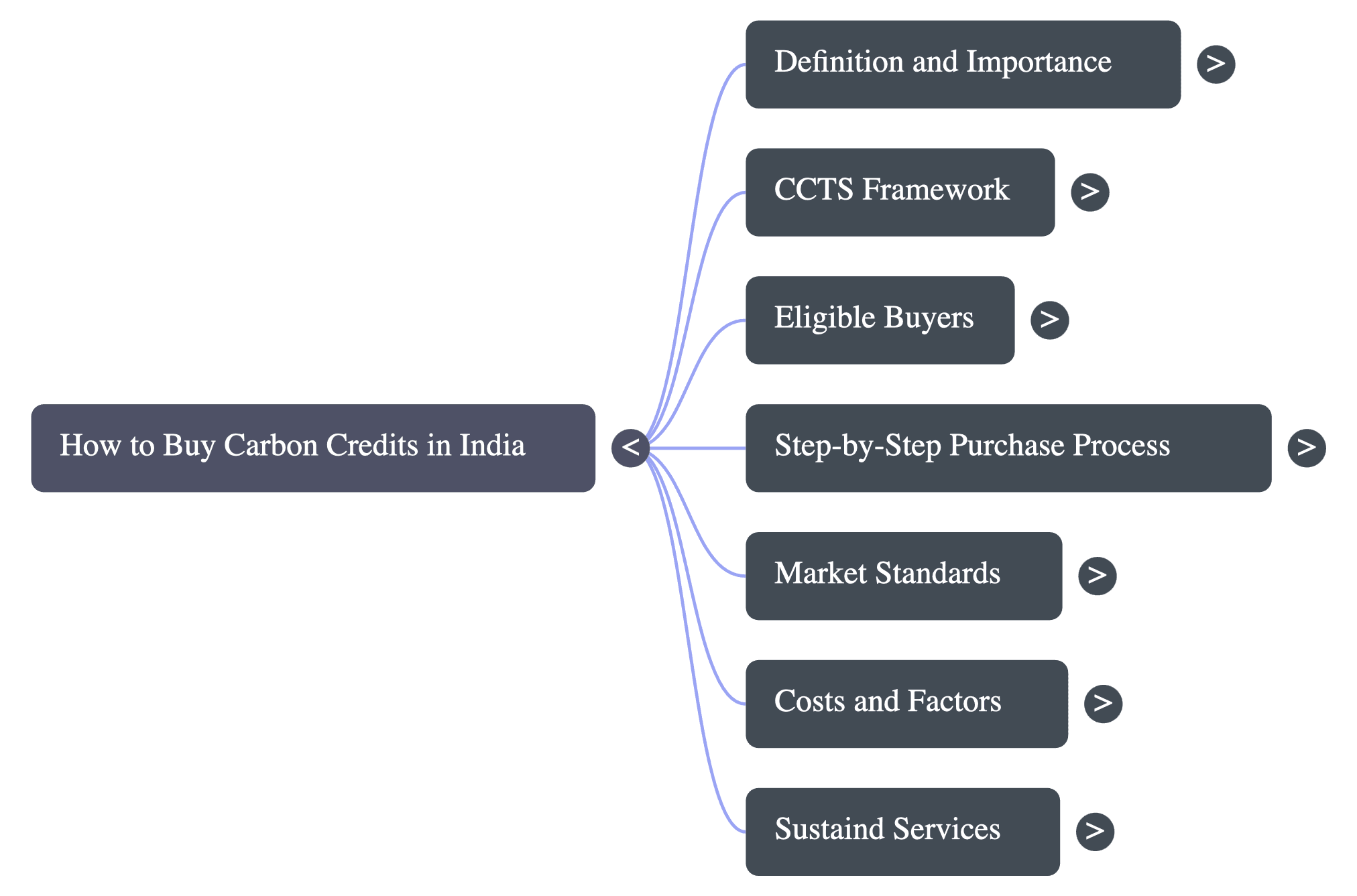
What Are Carbon Credits and Why Do They Matter?
A carbon credit is a tradable certificate representing the reduction or removal of one metric tonne of carbon dioxide equivalent (tCO₂e) from the atmosphere. These credits are generated by projects that actively cut emissions — think solar farms, biogas plants, afforestation drives, or industrial energy efficiency upgrades.
When a company or individual buys and retires a carbon credit, they are essentially paying for verified climate action elsewhere. It is not a replacement for reducing your own emissions, but a credible and recognised mechanism to offset what cannot yet be eliminated. In a country as vast and diverse as India — where industries are growing rapidly alongside a national commitment to reach net zero by 2070 — carbon credits serve as a vital bridge between economic development and environmental responsibility.
Understanding India's Carbon Market: The CCTS Framework
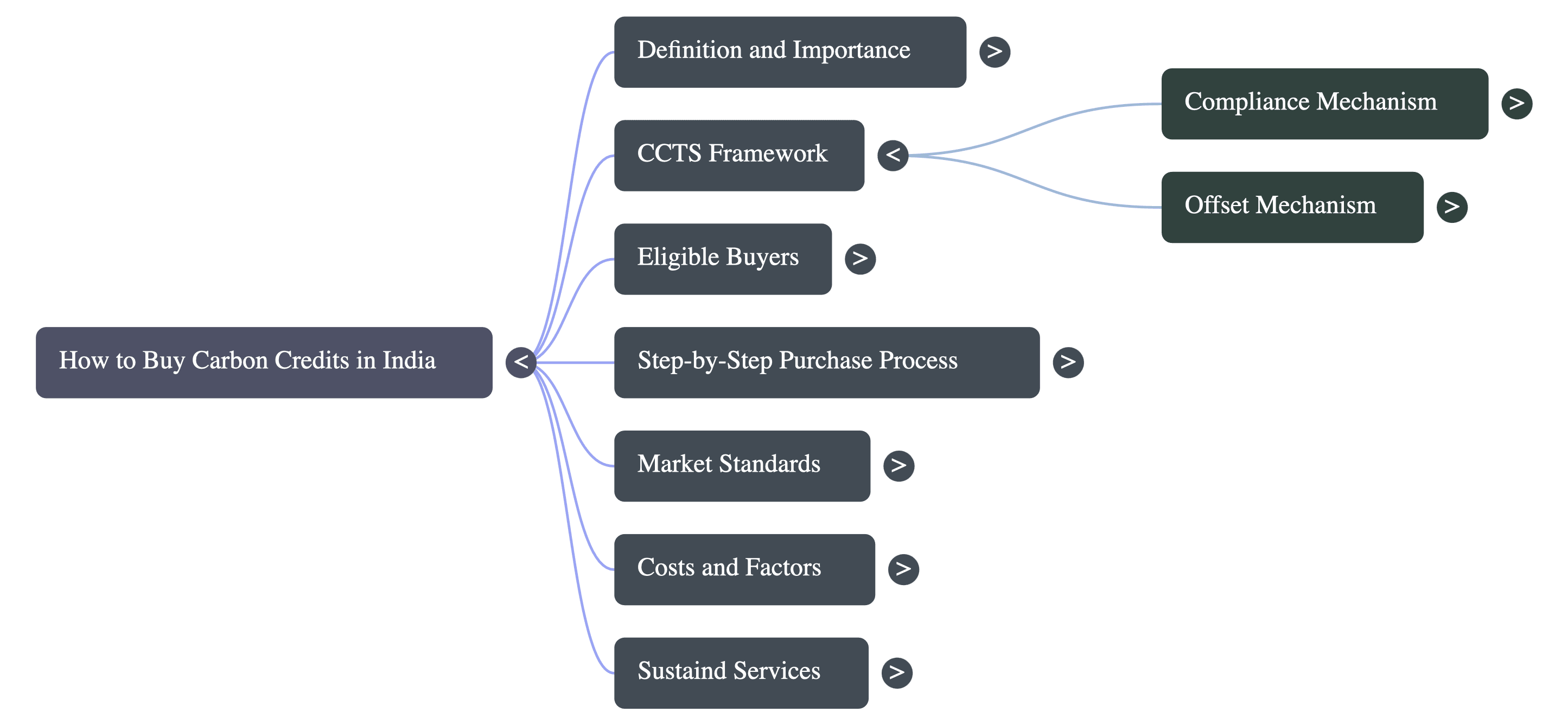
India's carbon market has entered a transformative new era. The Energy Conservation (Amendment) Act, 2022 gave the Central Government the authority to establish a formal Carbon Credit Trading Scheme (CCTS), which is now the backbone of the Indian Carbon Market (ICM). Administered by the Bureau of Energy Efficiency (BEE) under the Ministry of Power, the CCTS operates through two distinct pathways:
-
Compliance Mechanism: Mandates emissions intensity targets for heavy industries such as aluminium, cement, chlor-alkali, pulp and paper, textiles, petrochemicals, and petroleum refining. First trading under this track is expected by mid-to-late 2026. Compliance Mechanism: Mandates emissions intensity targets for heavy industries such as aluminium, cement, chlor-alkali, pulp and paper, textiles, petrochemicals, and petroleum refining. First trading under this track is expected by mid-to-late 2026.
-
Offset Mechanism (Voluntary Track): Open to any entity not covered by compliance obligations. Since June 2025, registrations have been open for non-obligated entities and project developers wishing to participate in this voluntary carbon credit market. Offset Mechanism (Voluntary Track): Open to any entity not covered by compliance obligations. Since June 2025, registrations have been open for non-obligated entities and project developers wishing to participate in this voluntary carbon credit market.
In March 2025, India's Ministry of Power approved eight crediting methodologies under the CCTS Offset Mechanism, covering renewable energy, green hydrogen, industrial energy efficiency, landfill methane recovery, and mangrove afforestation. This milestone opened the door wide for voluntary buyers and project developers alike.
Who Can Buy Carbon Credits in India?
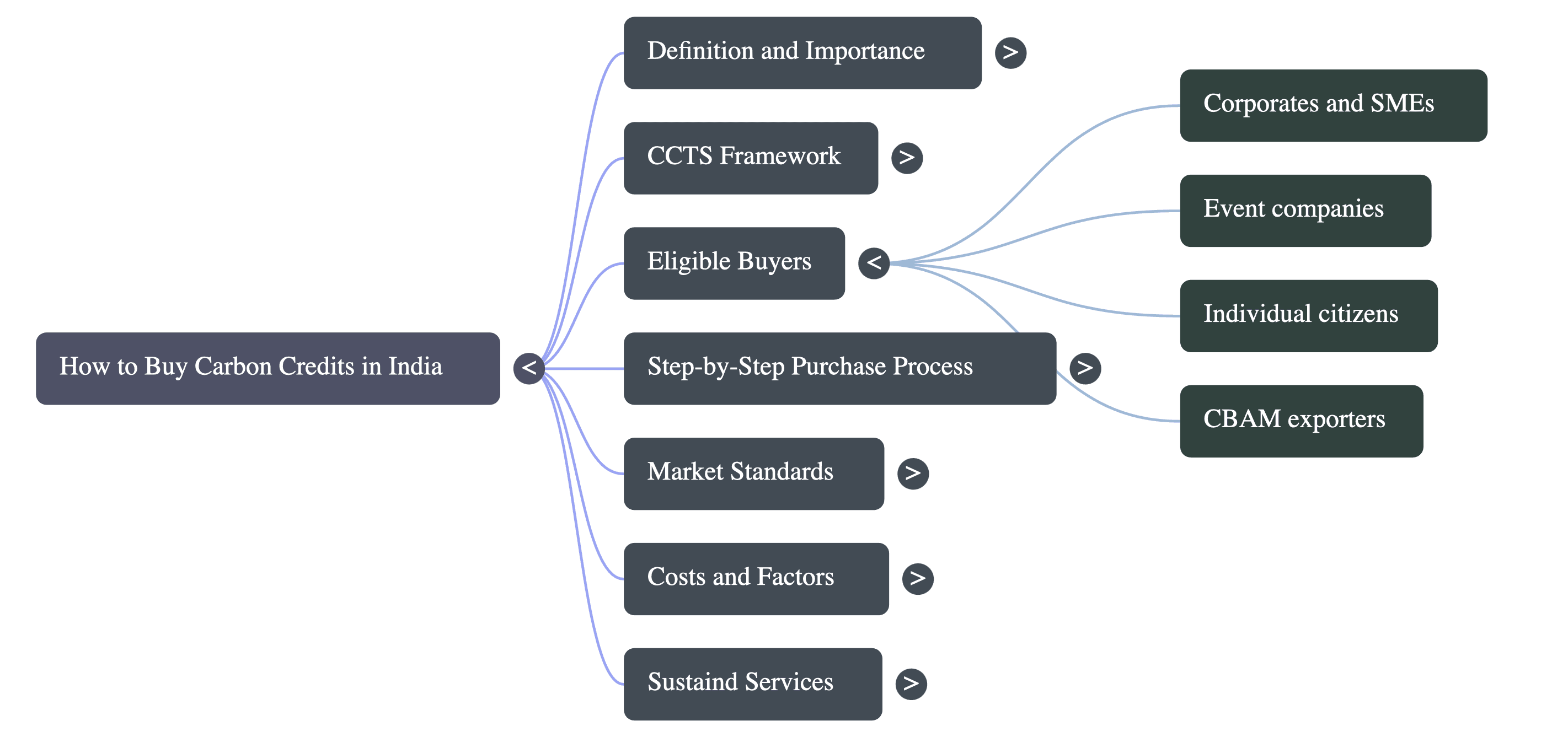
The short answer: almost anyone. The voluntary carbon market in India is open to a wide range of buyers:
-
Businesses and corporates seeking to meet ESG targets or achieve net-zero pledges Businesses and corporates seeking to meet ESG targets or achieve net-zero pledges
-
Startups and SMEs aiming to differentiate themselves with a verified sustainability footprint Startups and SMEs aiming to differentiate themselves with a verified sustainability footprint
-
Events and entertainment companies wanting to run carbon-neutral events Events and entertainment companies wanting to run carbon-neutral events
-
Individuals who want to offset their personal carbon footprint from travel, energy use, or lifestyle Individuals who want to offset their personal carbon footprint from travel, energy use, or lifestyle
-
Exporters managing EU Carbon Border Adjustment Mechanism (CBAM) compliance pressures Exporters managing EU Carbon Border Adjustment Mechanism (CBAM) compliance pressures
How to Buy Carbon Credits in India: Step-by-Step
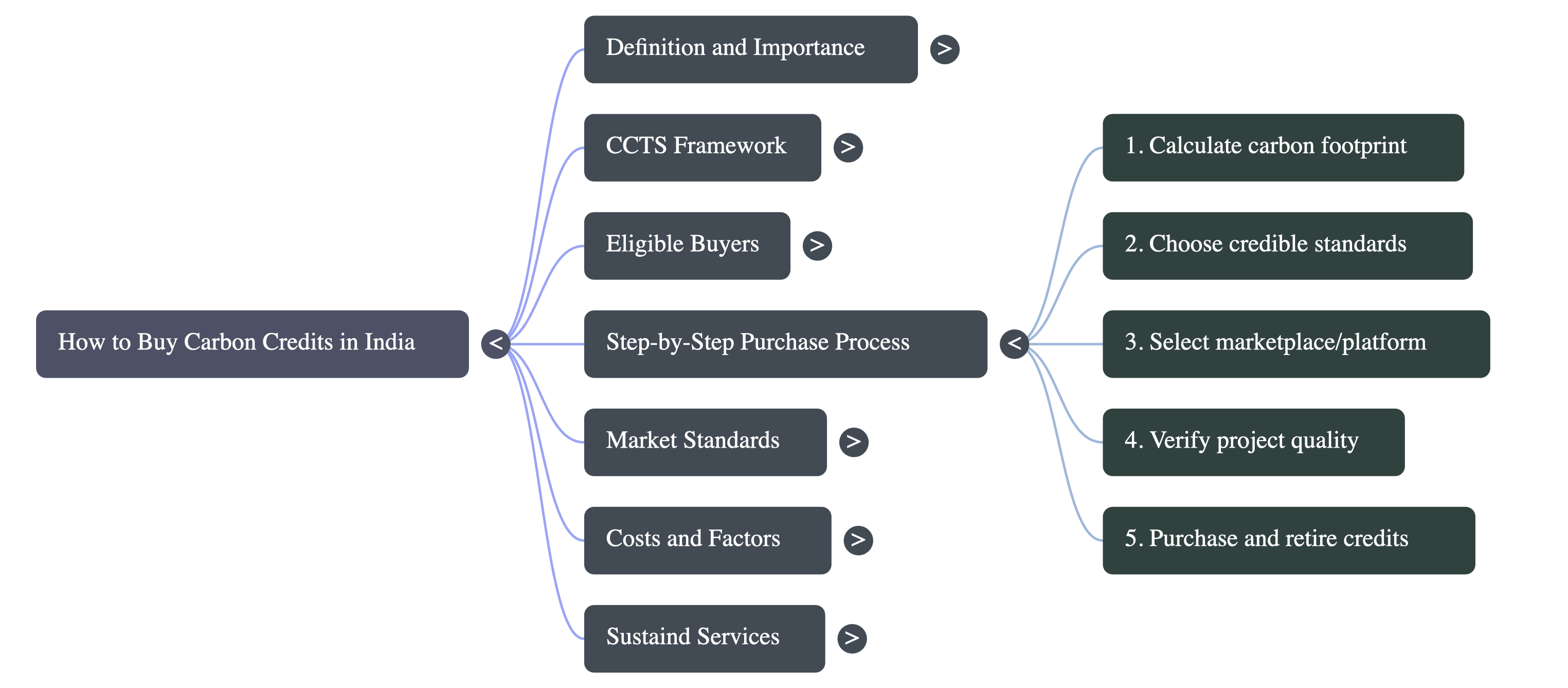
Step 1: Calculate Your Carbon Footprint
Before buying credits, understand how much you need to offset. Use a reliable carbon footprint calculator that accounts for your energy consumption, travel, supply chain, and operations. Sustaind offers carbon accounting tools tailored for Indian businesses, using local emission factors that reflect the Indian electricity grid and industry benchmarks.
Step 2: Choose a Credible Standard or Registry
Not all carbon credits are equal. When buying in India, look for credits verified under internationally recognised or domestically approved standards. Your options include the Indian Carbon Market's own Carbon Credit Certificates (CCCs) issued under CCTS, international standards like Gold Standard and Verra (VCS), and the Carbon Registry India (CR-I), which is a voluntary domestic registry that tracks and verifies carbon offset credits generated by Indian projects.
Step 3: Select the Right Marketplace or Platform
India's carbon credit buying landscape currently operates through both domestic and international channels. You can buy through dedicated sustainability platforms and carbon marketplaces, directly from project developers (such as renewable energy or afforestation project owners), international voluntary marketplaces like the Gold Standard Marketplace, or through sustainability consultants and intermediaries like Sustaind, who guide you to quality-verified credits aligned to your goals.
Step 4: Verify Project Quality Before Purchasing
Due diligence is critical. Before committing to a purchase, verify that the project has been independently audited, that credits are registered and have not been previously retired, and that the project delivers genuine co-benefits — such as local job creation, biodiversity protection, or community development. Credits without transparent documentation carry the risk of greenwashing and can undermine your credibility.
Step 5: Purchase and Retire the Credits
Once you have selected your credits, complete the purchase and ensure the credits are formally retired in the relevant registry. Retirement means the credit is permanently cancelled and cannot be resold or reused. You will typically receive a retirement certificate, which serves as verifiable proof of your climate action — essential for public sustainability reporting or ESG disclosures.
How Much Do Carbon Credits Cost in India?
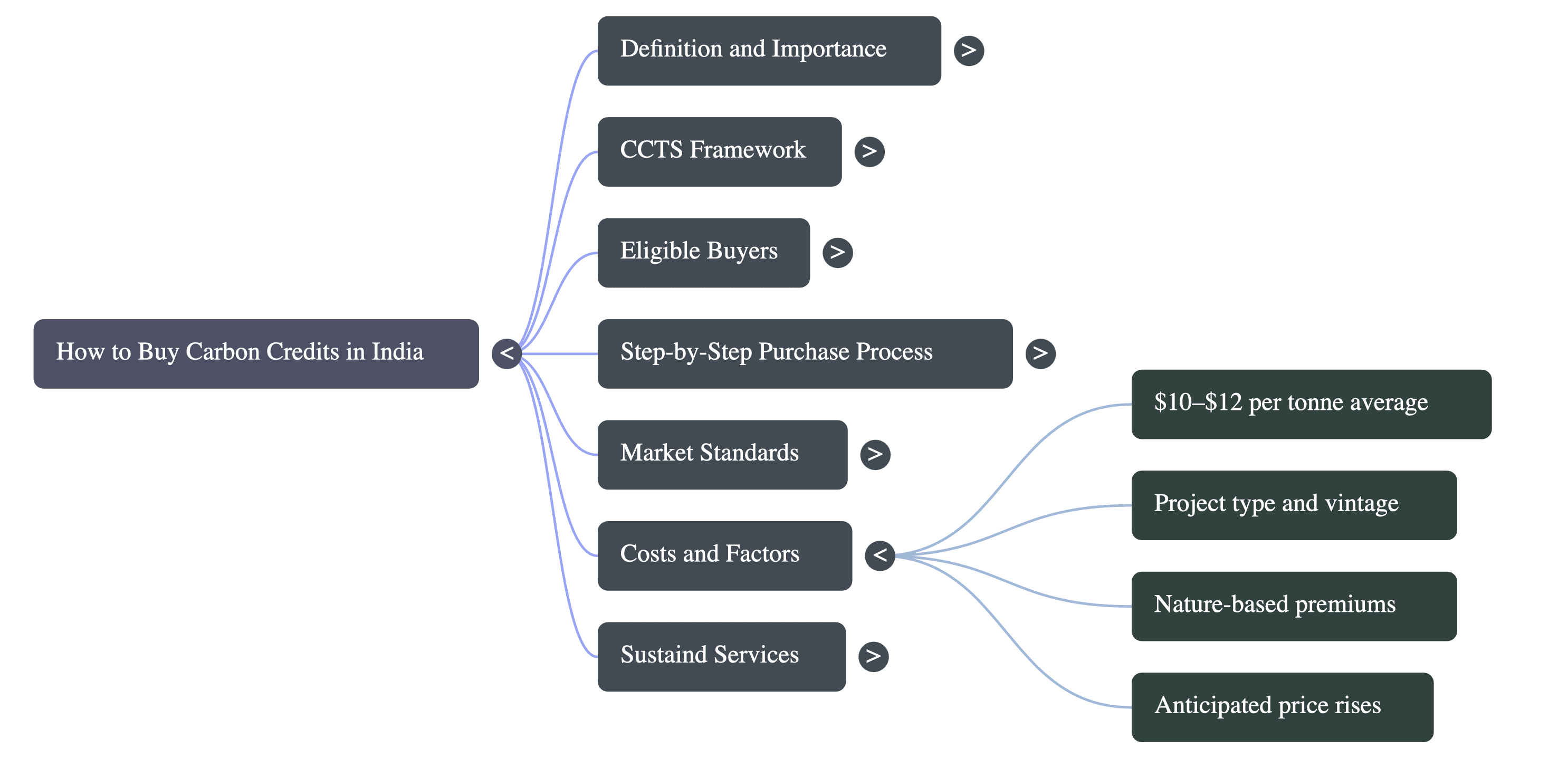
Carbon credit prices in India vary significantly based on the type of project, standard, vintage year, and co-benefits offered. On international voluntary markets, Indian-origin credits — particularly from solar and wind energy projects — have been available at roughly $10–$12 per tonne of CO₂ equivalent. Nature-based solutions like mangrove afforestation tend to command higher premiums. As the Indian Carbon Market matures and compliance obligations come into force from 2026 onward, domestic credit prices are expected to become more defined and potentially rise, making early participation in the voluntary market an advantageous strategic move.
How Sustaind Makes Carbon Credit Buying Simple
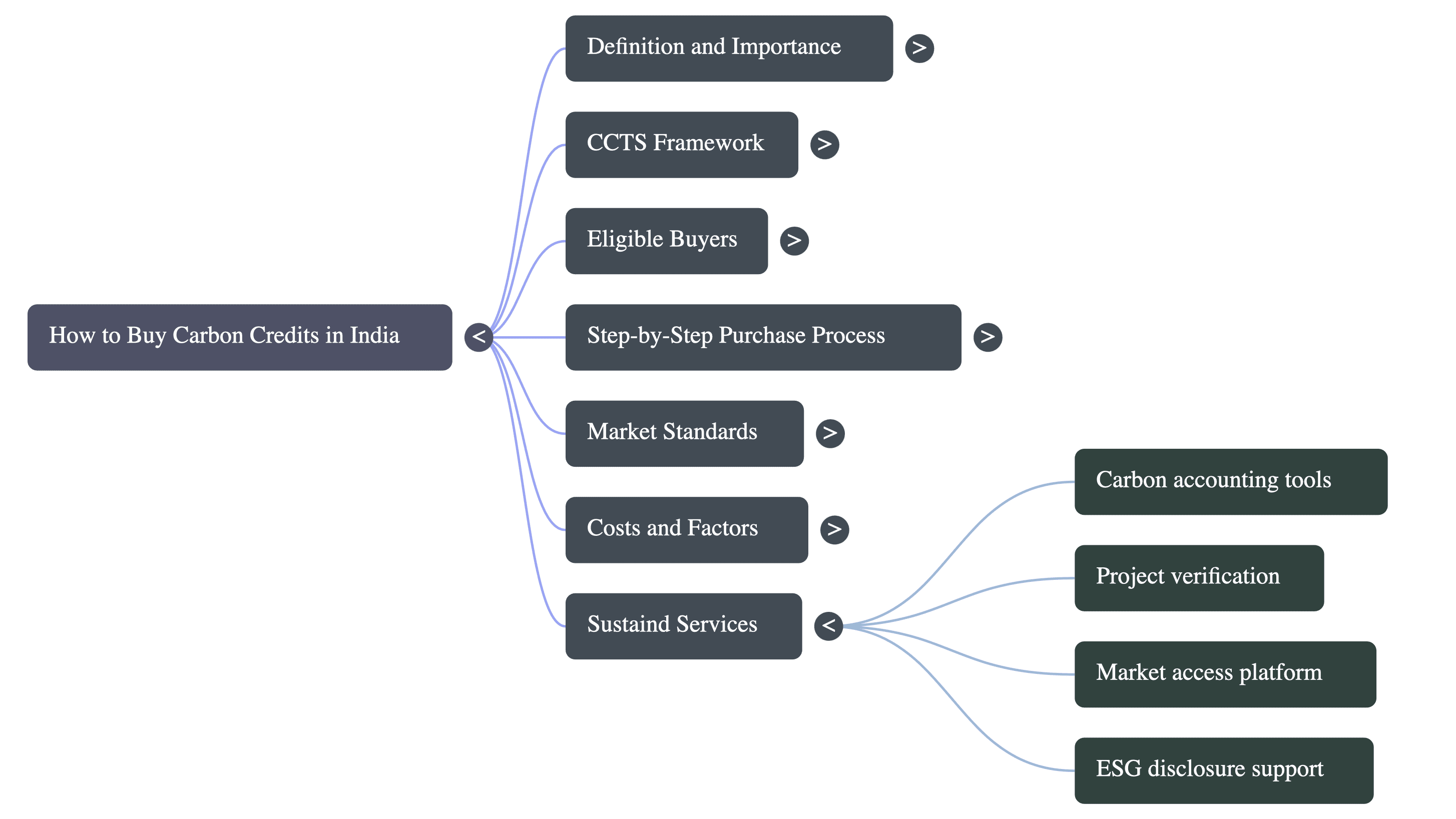
Navigating carbon markets can feel overwhelming — especially with a regulatory landscape evolving as rapidly as India's. That is exactly why Sustaind exists. We bring together carbon accounting, project verification expertise, and market access into a single, transparent platform built for Indian businesses and individuals. Whether you need help measuring your footprint, sourcing high-quality verified credits, or preparing sustainability disclosures for clients and investors, Sustaind is your end-to-end sustainability partner. Our approach is always data-driven, locally relevant, and globally credible.
Key Things to Keep in Mind
-
Carbon credits complement but do not replace direct emissions reduction efforts — always prioritise reducing first. Carbon credits complement but do not replace direct emissions reduction efforts — always prioritise reducing first.
-
Ensure credits are not double-counted — they should be registered and retired in a publicly accessible registry. Ensure credits are not double-counted — they should be registered and retired in a publicly accessible registry.
-
India's compliance carbon market (CCTS) is expected to launch its first trades around mid-to-late 2026 — businesses in covered sectors should begin preparing now. India's compliance carbon market (CCTS) is expected to launch its first trades around mid-to-late 2026 — businesses in covered sectors should begin preparing now.
-
International standards (Gold Standard, Verra) remain widely accepted and are a strong choice until the Indian domestic market is fully operational. International standards (Gold Standard, Verra) remain widely accepted and are a strong choice until the Indian domestic market is fully operational.
Conclusion: Your Climate Action Starts Here
India's carbon credit market is no longer a distant concept — it is an active, rapidly maturing ecosystem with real regulatory structure and growing commercial opportunity. Whether you are a business leader building a net-zero strategy or an individual ready to take responsibility for your emissions, buying verified carbon credits is one of the most impactful climate actions available to you today.
- Sustainability Consultant
- Sustainability Service