
- Climate Risk Assessment
- Sustainability Service The conversation around sustainability is no longer limited to multinational corporations with dedicated ESG departments. Across India, small and medium enterprises (SMEs) are finding themselves at a critical crossroads — sustainability consulting for SMEs in India has evolved from a niche advisory service into an urgent business imperative. Whether it is adapting to evolving regulatory frameworks, responding to demands from sustainability-conscious buyers, or unlocking access to green financing, the need for structured sustainability guidance has never been more pressing. Sustaind was built specifically for this moment — to make sustainability a practical, accessible, and commercially rewarding journey for India's backbone businesses.
India's SME Landscape and the Sustainability Opportunity
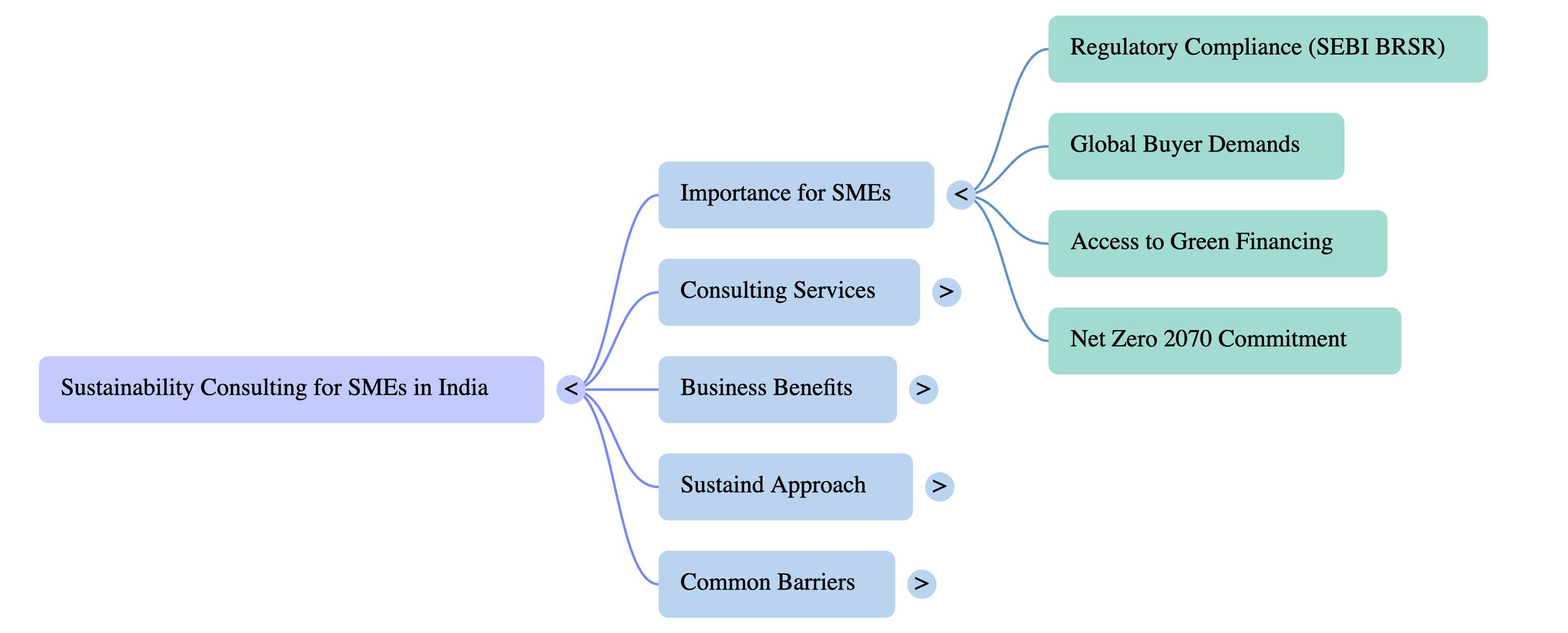
India is home to more than 63 million SMEs, collectively contributing nearly 30% of the country's GDP and over 40% of its exports. Yet, this sector is also one of the largest contributors to industrial pollution, resource inefficiency, and unchecked carbon emissions. This is not because SME owners are indifferent to the environment — most are not — but because they have historically lacked access to the right guidance, tools, and frameworks to make sustainability practical at their scale.
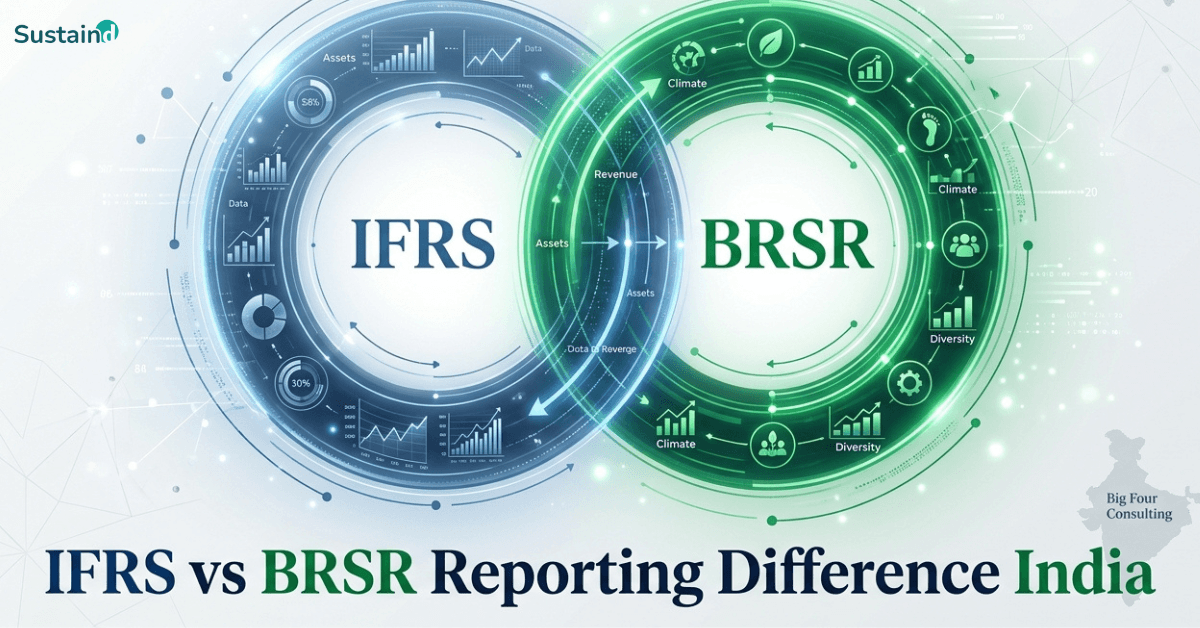
The regulatory environment is also shifting rapidly. The Securities and Exchange Board of India (SEBI) has introduced Business Responsibility and Sustainability Reporting (BRSR) requirements. Supply chain sustainability is now a precondition in procurement processes from global buyers. And with India's commitment to achieving net zero by 2070, the policy tailwinds supporting green business transformation are only getting stronger. For SMEs, this is not a threat — it is one of the biggest opportunities of the decade.
What Sustainability Consulting for SMEs Actually Involves
Contrary to popular belief, sustainability consulting is not about vague green pledges or expensive certifications. For SMEs, it is a structured, outcome-driven process that touches multiple dimensions of business operations. Here is what a practical engagement typically covers:
-
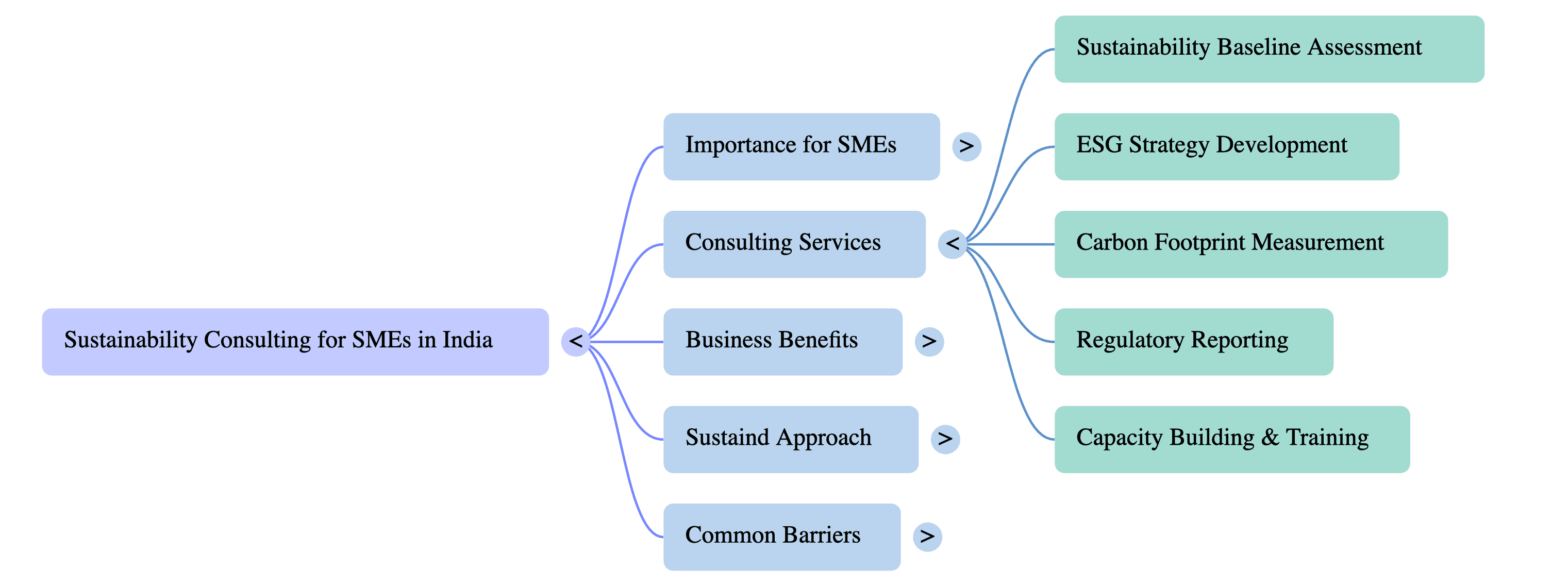
Sustainability Baseline Assessment: Before any meaningful change can happen, a business must understand where it stands. This involves mapping current energy consumption, water usage, waste generation, supply chain emissions, and governance practices to establish a credible starting point. Sustainability Baseline Assessment: Before any meaningful change can happen, a business must understand where it stands. This involves mapping current energy consumption, water usage, waste generation, supply chain emissions, and governance practices to establish a credible starting point.
-
ESG Strategy Development: A good sustainability consultant helps an SME design an ESG (Environmental, Social, Governance) roadmap that aligns with business goals — not one that sits in a drawer. This roadmap translates broad sustainability principles into concrete, time-bound actions relevant to the specific industry and scale of the business. ESG Strategy Development: A good sustainability consultant helps an SME design an ESG (Environmental, Social, Governance) roadmap that aligns with business goals — not one that sits in a drawer. This roadmap translates broad sustainability principles into concrete, time-bound actions relevant to the specific industry and scale of the business.
-
Carbon Footprint Measurement and Reduction: Understanding and managing Scope 1, 2, and 3 emissions is increasingly important — not just for compliance, but for accessing green credit lines and demonstrating credibility to large enterprise buyers. Carbon Footprint Measurement and Reduction: Understanding and managing Scope 1, 2, and 3 emissions is increasingly important — not just for compliance, but for accessing green credit lines and demonstrating credibility to large enterprise buyers.
-
Regulatory Compliance and Reporting: From BIS standards to BRSR disclosures and GRI-aligned reporting, SMEs face a growing web of sustainability-related compliance obligations. Consultants help businesses navigate these requirements efficiently and accurately. Regulatory Compliance and Reporting: From BIS standards to BRSR disclosures and GRI-aligned reporting, SMEs face a growing web of sustainability-related compliance obligations. Consultants help businesses navigate these requirements efficiently and accurately.
-
Green Financing Access: Many SMEs are unaware of the growing pool of sustainability-linked loans, green bonds, and climate finance instruments available through Indian banks, NBFCs, and development finance institutions. Sustainability consultants help build the credibility and documentation needed to access these funds. Green Financing Access: Many SMEs are unaware of the growing pool of sustainability-linked loans, green bonds, and climate finance instruments available through Indian banks, NBFCs, and development finance institutions. Sustainability consultants help build the credibility and documentation needed to access these funds.
-
Capacity Building and Training: Sustainability is not just a strategy — it is a culture. Effective consulting includes equipping teams at all levels with the knowledge and tools to make sustainable choices part of everyday operations. Capacity Building and Training: Sustainability is not just a strategy — it is a culture. Effective consulting includes equipping teams at all levels with the knowledge and tools to make sustainable choices part of everyday operations.
Why SMEs Often Hesitate — and Why That Is Changing
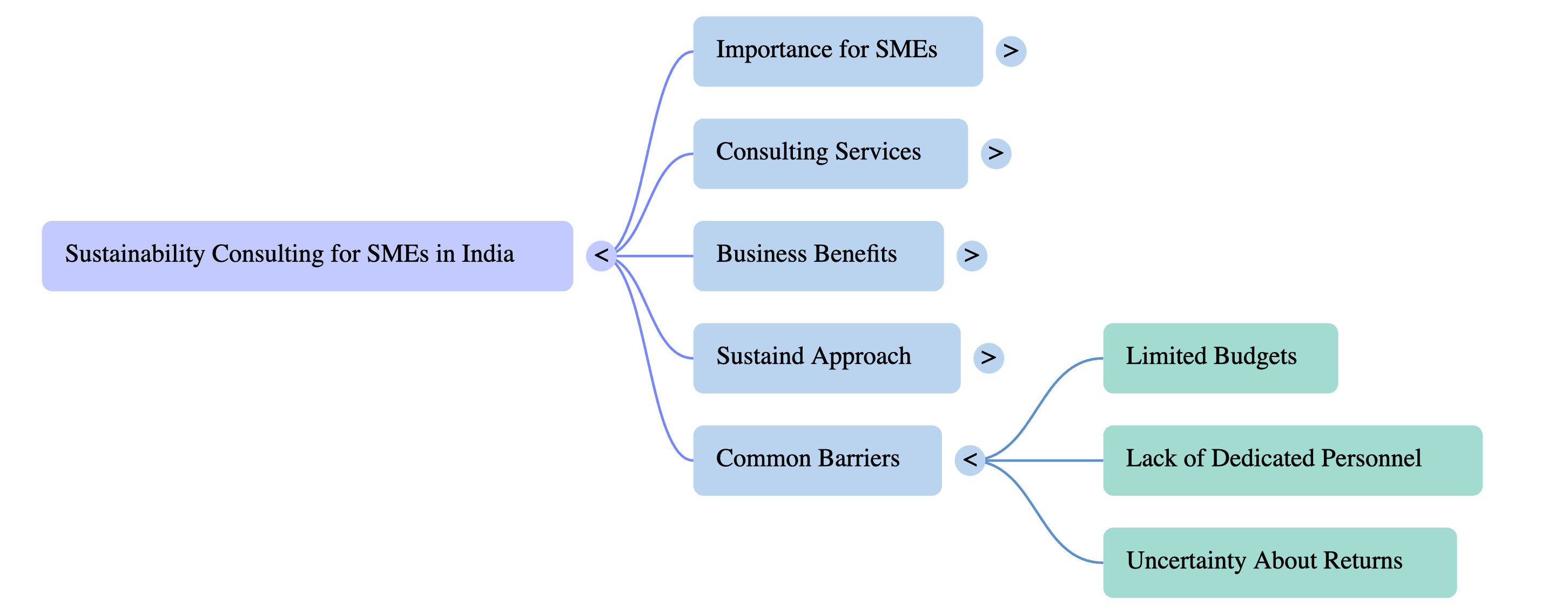
The most common objections from SME owners when it comes to sustainability are predictable: limited budgets, lack of dedicated personnel, uncertainty about returns, and the perception that sustainability is something only large companies need to worry about. These are legitimate concerns, but they are increasingly outdated.
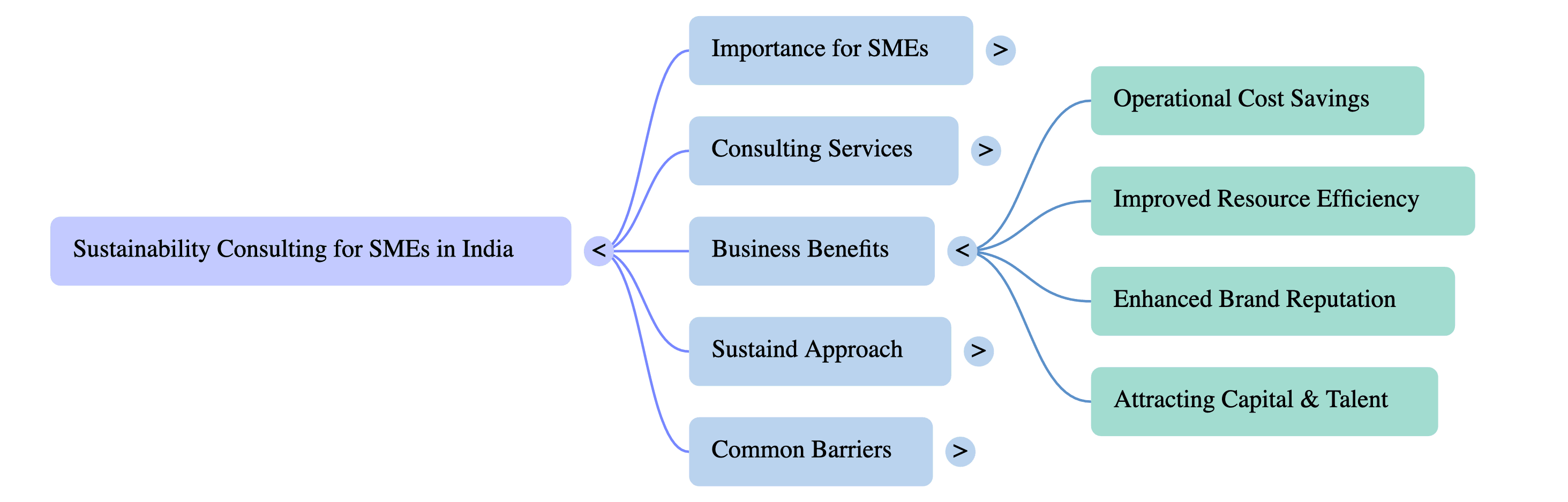
A well-designed sustainability programme typically delivers measurable cost savings within the first year through improved energy efficiency, waste reduction, and resource optimisation. Beyond cost savings, sustainability credentials are increasingly influencing buyer decisions — particularly for SMEs that are part of global or domestic supply chains where large enterprise customers are setting supplier sustainability standards as a condition of doing business.
The rise of impact-oriented investors and ESG-linked credit products has also made sustainability a genuine financial lever — not just a compliance checkbox. SMEs that proactively build their sustainability credentials today are better positioned to attract capital, talent, and partnerships tomorrow.
How Sustaind Approaches SME Sustainability Consulting
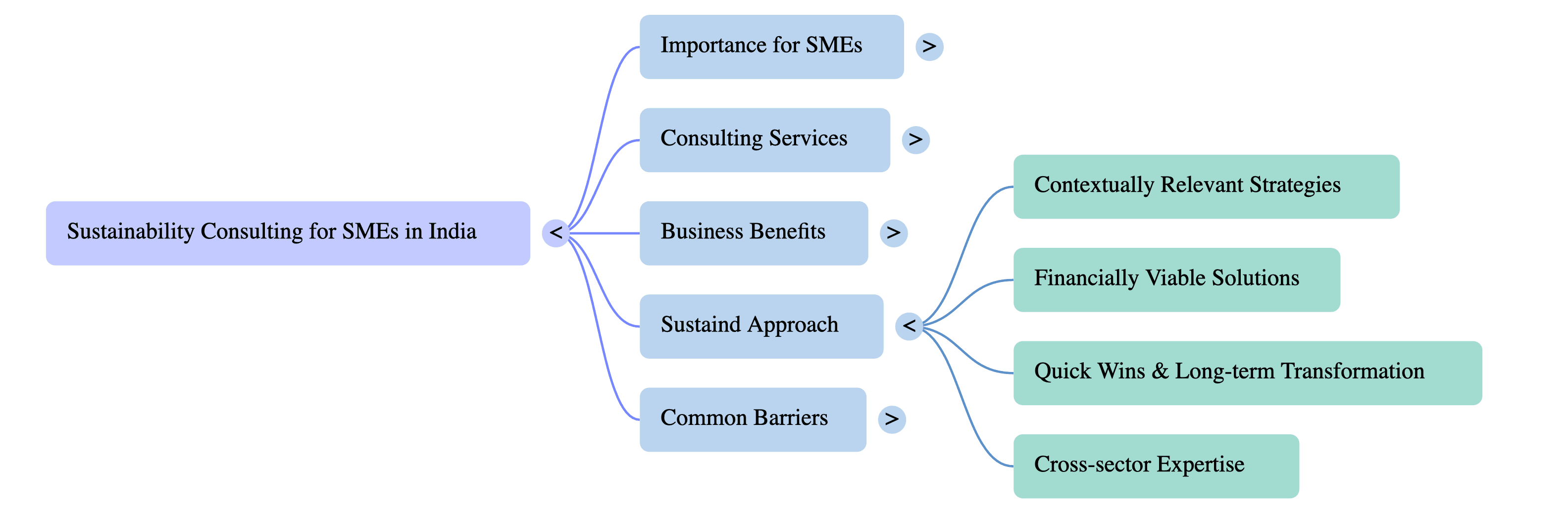
Sustaind was founded on a simple but powerful belief: sustainability should be as much a part of an SME's business toolkit as accounting or marketing. The team at Sustaind brings deep expertise in sustainability strategy, ESG frameworks, climate science, and Indian regulatory requirements — combined with a genuine understanding of the practical realities that SMEs operate within.
Unlike generic consulting firms that offer one-size-fits-all solutions, Sustaind works closely with each client to design sustainability strategies that are contextually relevant, financially viable, and operationally achievable. Engagements are structured to deliver quick wins alongside long-term transformation — ensuring that business owners see the value of sustainability early in the journey, not just at the end of a multi-year plan.
Sustaind supports SMEs across sectors including manufacturing, textiles, food processing, logistics, retail, and professional services — helping businesses of all sizes build sustainability practices that are meaningful, measurable, and commercially smart.
The Business Case: Sustainability Is Good Economics
The most compelling argument for sustainability consulting is not altruism — it is economics. SMEs that adopt structured sustainability practices consistently report lower operating costs, stronger supplier and customer relationships, improved access to finance, and enhanced brand reputation. In an increasingly transparent marketplace, how a business manages its environmental and social impact is fast becoming a proxy for how well it is managed overall.
India's push toward a circular economy, clean energy transition, and responsible production is creating entirely new markets and competitive advantages for businesses that move early. SMEs that build sustainability into their DNA now will not just survive the transition — they will lead it.
Start Your Sustainability Journey with Sustaind
Sustainability is not a destination — it is an ongoing commitment to doing business better.
Whether you are taking your first steps or looking to deepen an existing sustainability programme, Sustaind offers the expertise, tools, and hands-on support to help your SME build a resilient, responsible, and future-ready business.
The time to act is now. Businesses that invest in sustainability today are building competitive moats that will matter deeply in the years ahead. Sustaind is here to make that journey practical, purposeful, and commercially rewarding for India's SMEs.
- Sustainability Consultant