
- Climate Risk Assessment
- Sustainability Service Verra or Gold Standard? Choosing the right registry for your carbon project is one of the most pivotal decisions any project developer or corporate sustainability team will make. In a rapidly maturing voluntary carbon market — one where buyers are increasingly scrutinising the environmental integrity of every credit they purchase — the registry you select signals your commitment to quality, transparency, and impact. At Sustaind, we work closely with organisations navigating these very crossroads. This guide breaks down the key differences between Verra's Verified Carbon Standard (VCS) and the Gold Standard, helping you make an informed choice that aligns with your project type, target buyers, and long-term sustainability ambitions.
Also Read: Difference Between Carbon Credits and Carbon Offsets
Understanding the Two Giants of Carbon Certification
Before diving into the comparison, it helps to understand what each registry stands for and who they serve.
Verra (Verified Carbon Standard — VCS)
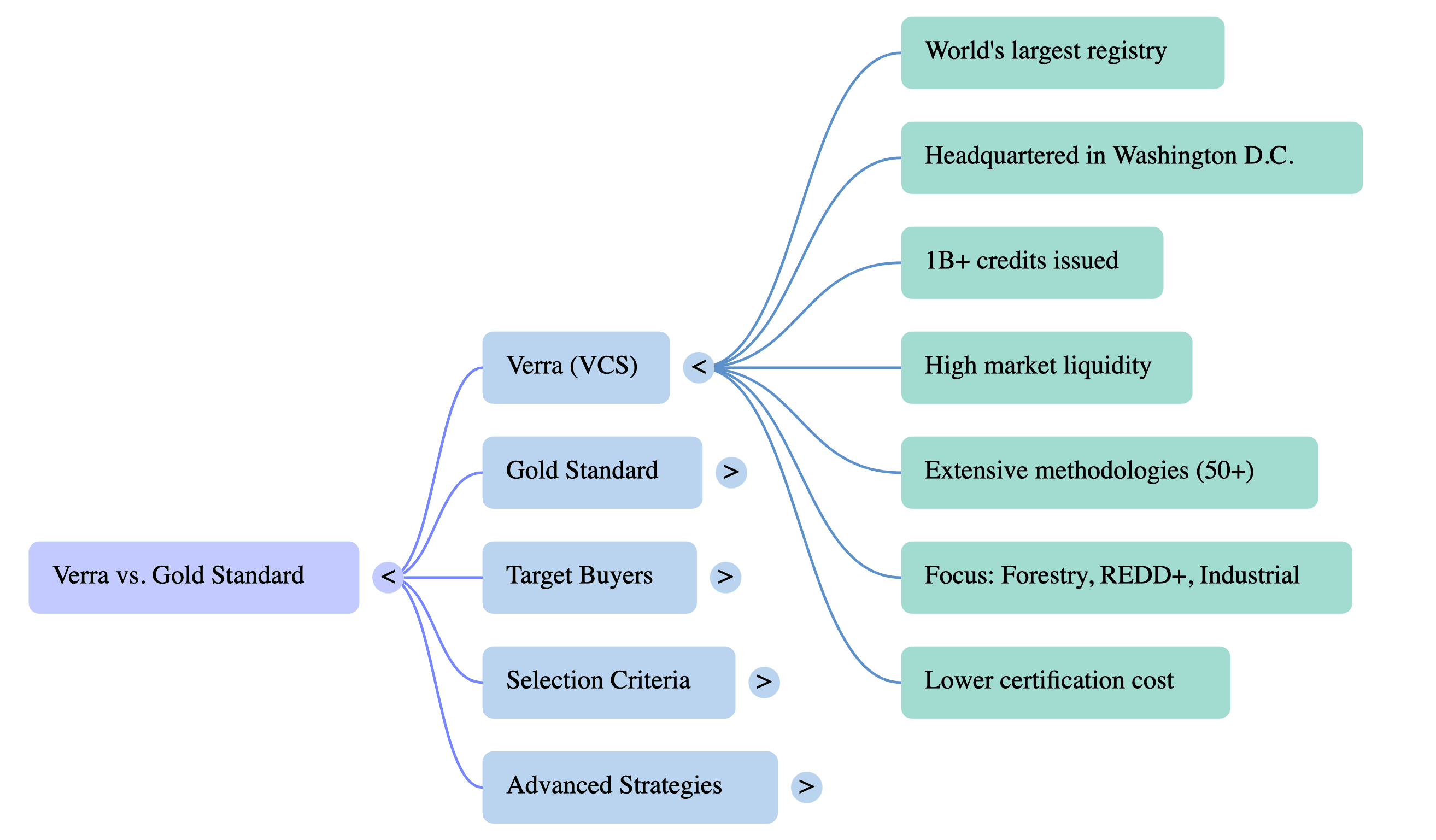
Founded in 2005 and headquartered in Washington, D.C., Verra administers the world's largest voluntary carbon crediting programme. The VCS Programme has issued over a billion carbon credits across thousands of projects globally — from forest conservation in the Amazon to renewable energy installations across Southeast Asia. Verra's sheer scale makes it the default choice for many developers seeking market liquidity and wide buyer recognition.
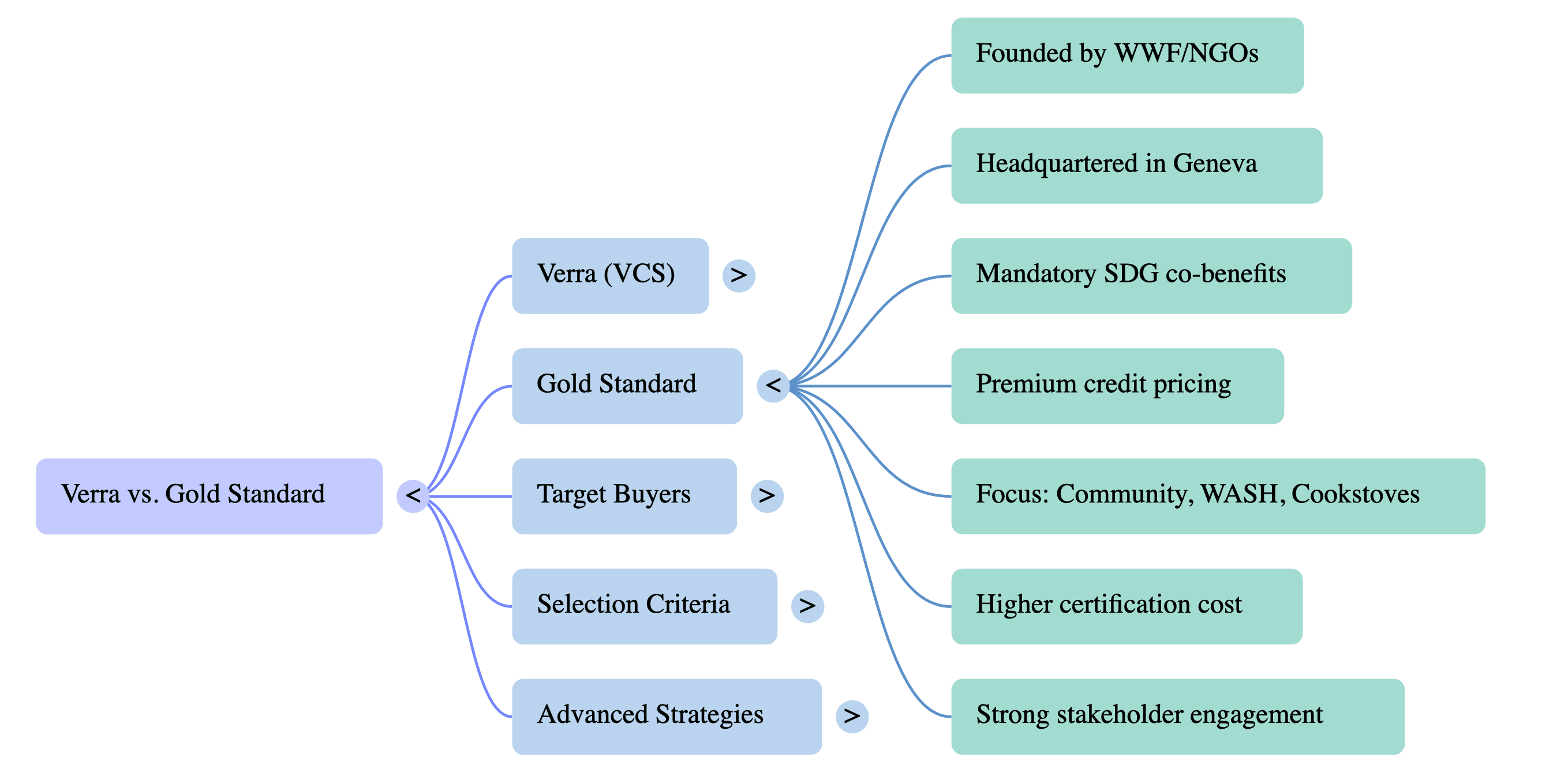
Established in 2003 by WWF and other international NGOs, the Gold Standard is headquartered in Geneva and is renowned for its rigorous co-benefits framework. It certifies projects under two main labels: Gold Standard for the Global Goals (GS4GG) for voluntary markets and the Gold Standard Verified Emission Reductions (GS-VER) label. The Gold Standard places a premium on measurable contributions to the UN Sustainable Development Goals (SDGs), making its credits especially attractive to buyers with strong ESG reporting mandates.
Head-to-Head Comparison: Verra vs. Gold Standard
Largest globally; 1B+ credits issued
Smaller but premium-priced
Forestry, land use, renewables, waste
Renewables, cookstoves, WASH, forestry
Mandatory and deeply embedded
Higher due to rigorous co-benefit audits
Widely recognised; high liquidity
Premium brand; preferred by ESG buyers
Extensive and diverse
More selective, especially for nature-based
Registry Transparency
Public registry; detailed project data
Public registry; strong stakeholder engagement
Choosing Based on Your Project Type
The nature of your project is arguably the most important factor in registry selection. Verra's VCS Programme supports an extraordinarily wide range of methodologies — over 50 — spanning agriculture, forestry, land use (AFOLU), renewable energy, methane avoidance, and blue carbon. This breadth makes Verra particularly compelling for large-scale REDD+ projects, improved forest management, and complex industrial decarbonisation efforts.
The Gold Standard, by contrast, excels in community-centred, socially impactful projects. Clean cookstoves, safe water access (WASH), solar home systems for off-grid communities, and smallholder agricultural interventions are where Gold Standard truly shines. If your project has a tangible livelihood dimension — reducing indoor air pollution, improving health outcomes, or empowering women in rural communities — Gold Standard's mandatory SDG tracking adds a layer of storytelling and impact verification that Verra cannot match by default.
Know Your Buyers: Who Values What?
Understanding your end buyer is as critical as understanding your project. At Sustaind, we help clients identify the right markets for their credits before they even begin the certification process. Here is a general buyer-to-registry mapping:
-
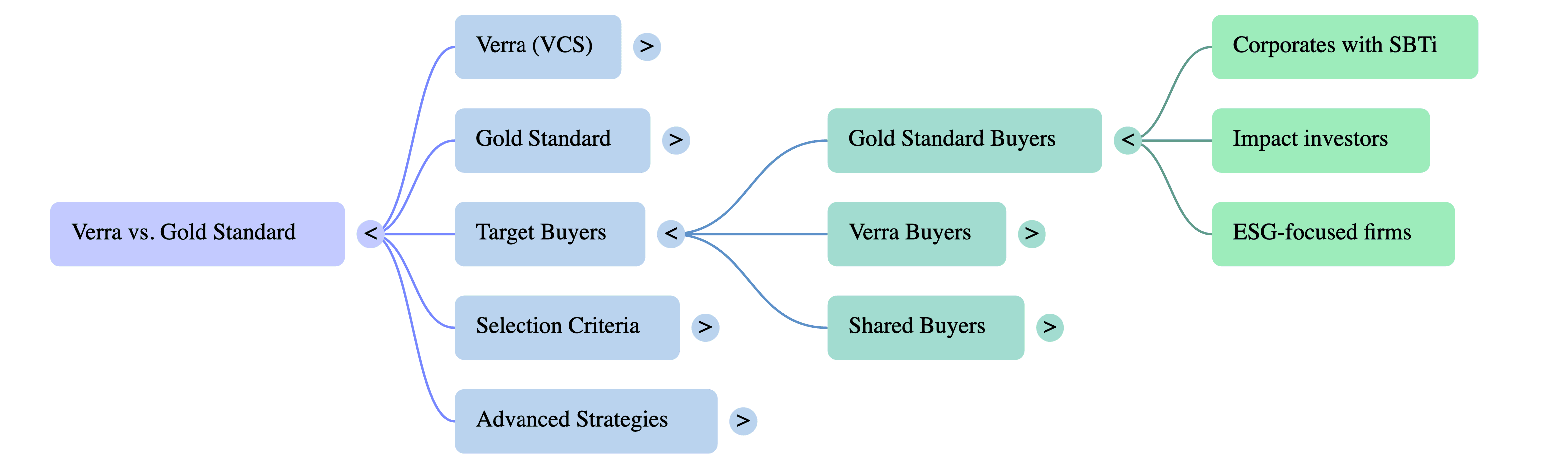
Corporates with Science Based Targets (SBTi) commitments often prefer Gold Standard credits for their SDG co-benefit reporting. Corporates with Science Based Targets (SBTi) commitments often prefer Gold Standard credits for their SDG co-benefit reporting.
-
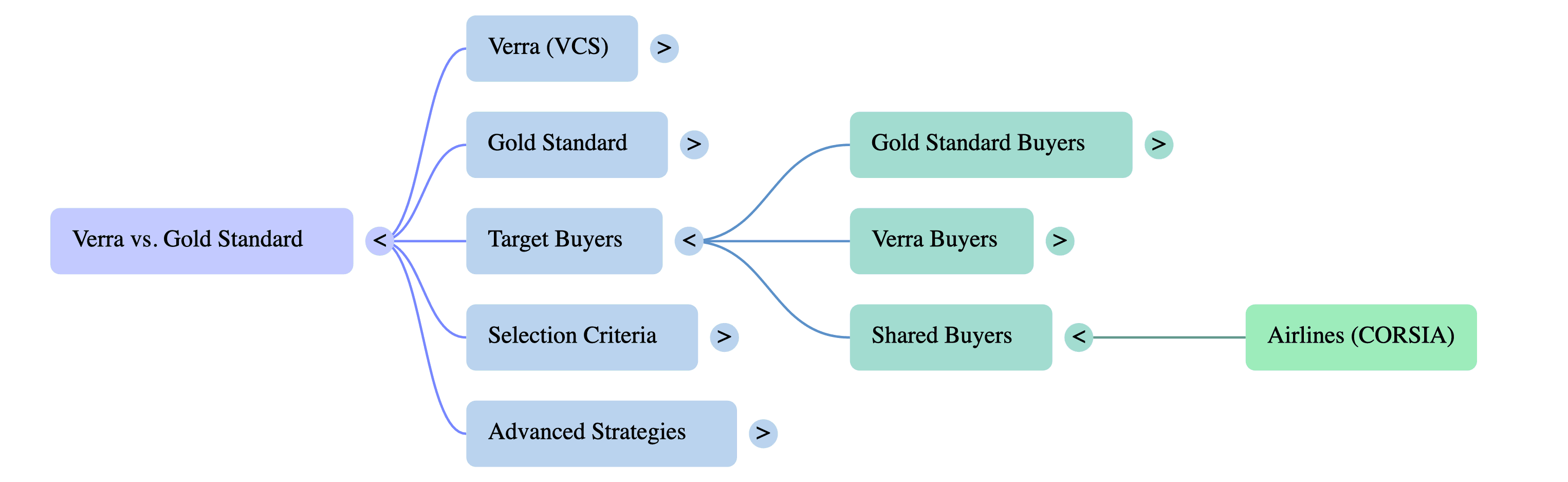
Airlines participating in CORSIA (Carbon Offsetting and Reduction Scheme for International Aviation) accept both Verra VCS and Gold Standard credits, though CORSIA eligibility criteria apply. Airlines participating in CORSIA (Carbon Offsetting and Reduction Scheme for International Aviation) accept both Verra VCS and Gold Standard credits, though CORSIA eligibility criteria apply.
-
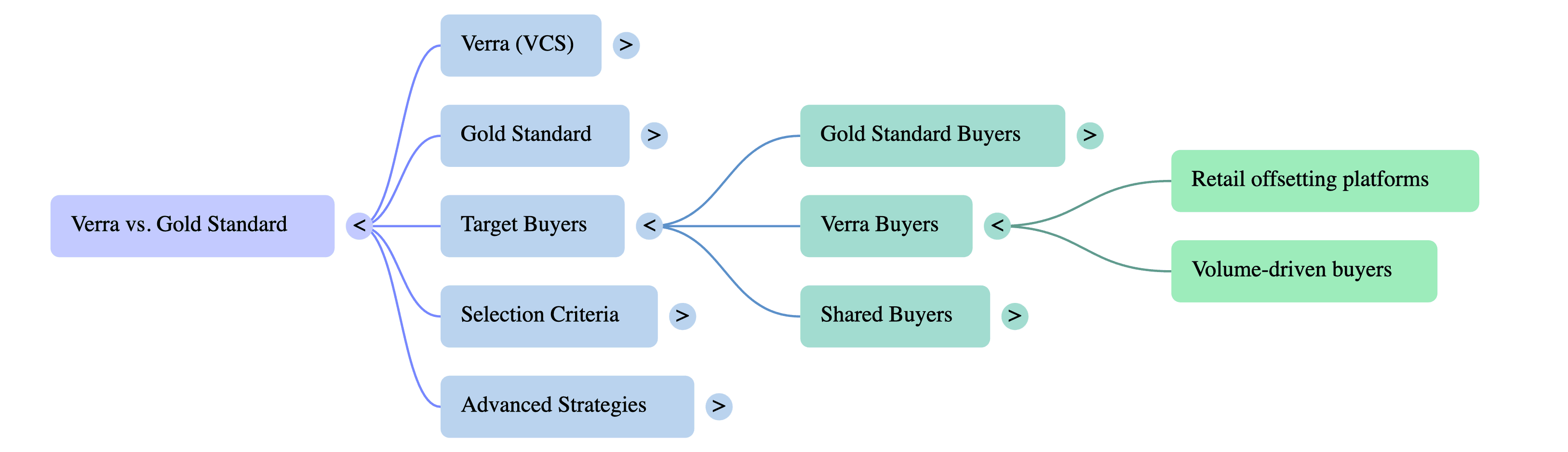
Retail or consumer-facing offsetting platforms frequently stock Verra credits given their volume and price accessibility. Retail or consumer-facing offsetting platforms frequently stock Verra credits given their volume and price accessibility.
-
Impact investors and development finance institutions tend to value Gold Standard's rigorous social impact metrics. Impact investors and development finance institutions tend to value Gold Standard's rigorous social impact metrics.
-
Compliance markets in some jurisdictions are beginning to accept or cross-reference voluntary credits, and Verra's scale gives it an edge in these emerging conversations. Compliance markets in some jurisdictions are beginning to accept or cross-reference voluntary credits, and Verra's scale gives it an edge in these emerging conversations.
Cost, Timeline, and Administrative Considerations
Registry certification is not a one-time event — it involves ongoing monitoring, reporting, and verification (MRV) cycles, typically every one to five years. Verra's certification process is generally considered more cost-efficient for large-scale projects, as its well-established methodologies reduce the need for bespoke validation work. Its Project Design Documents (PDDs) are standardised, and a large ecosystem of third-party validators (Validation and Verification Bodies or VVBs) keeps timelines competitive.
Gold Standard certification, while costlier, brings a premium that often translates into higher credit prices. Projects certified under Gold Standard routinely command a 20–50% price premium over comparable VCS credits in the voluntary market. For smaller, community-focused projects where the volume of credits may be modest, this premium can significantly improve financial viability. The Gold Standard's stakeholder consultation requirements, though time-intensive, also build community trust and reduce the risk of project-level disputes.
Can You Use Both? The Dual-Certification Strategy
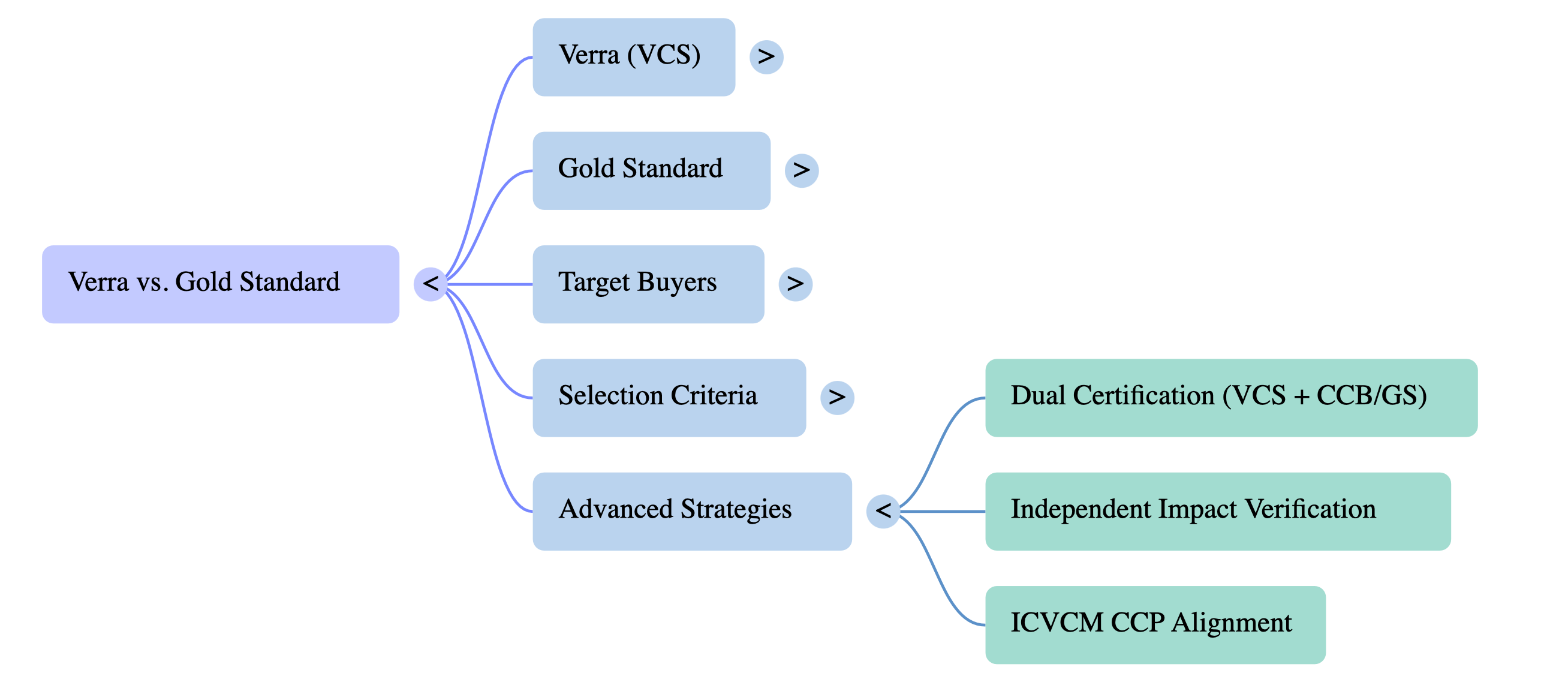
An increasingly popular approach, particularly for AFOLU projects, is dual certification — pursuing both VCS and the Climate, Community & Biodiversity (CCB) Standards (administered by Verra) alongside Gold Standard or another co-benefit framework. This strategy maximises buyer appeal by combining VCS's market liquidity with the social and biodiversity co-benefit narrative that premium buyers demand. However, it also significantly increases project costs and administrative complexity, so it is best suited for projects with multi-year timelines and strong upfront financing.
Sustaind's advisory team regularly helps clients evaluate whether the cost of dual certification is justified by the projected credit price differential and target buyer pool. In many cases, a well-positioned single-registry project delivers better returns than an over-engineered dual-label one.
The Integrity Question: Recent Scrutiny and What It Means for You
Both Verra and Gold Standard have faced increased scrutiny as the voluntary carbon market matures. Verra, in particular, faced investigative journalism in 2023 questioning the additionality of some REDD+ credits. In response, Verra has been developing its next-generation standard — the Core Carbon Principles (CCPs) aligned framework — through the Integrity Council for the Voluntary Carbon Market (ICVCM). Gold Standard, meanwhile, has long maintained stricter additionality and baseline-setting requirements, which has helped it largely avoid similar controversies.
For project developers and buyers alike, this underscores a critical truth: registry selection is also a reputational decision. Whichever registry you choose, ensure your project meets — or exceeds — the minimum standards, and consider engaging with independent impact verification to future-proof your credits against evolving market expectations.
Sustaind's Recommendation: There Is No Universal Answer
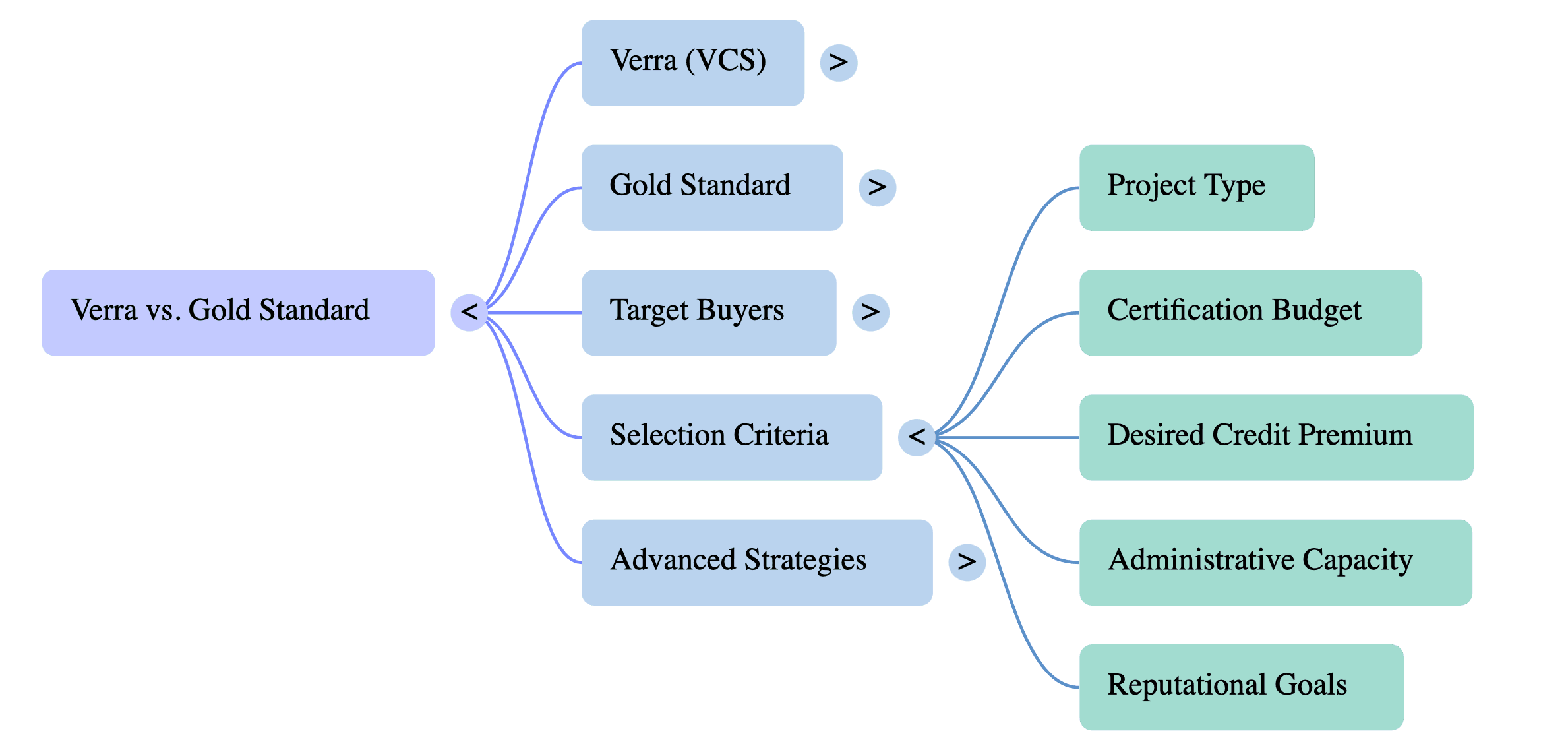
The honest answer is that neither Verra nor Gold Standard is universally superior. The right registry is the one that best fits your project's ecological and social context, your target buyers' expectations, your budget for certification, and your organisation's long-term credibility goals. Large-scale nature-based solutions seeking maximum market access often find Verra the pragmatic choice. Community-impact projects targeting ESG-conscious corporates are frequently better served by Gold Standard's premium positioning.
At Sustaind, we provide end-to-end carbon project advisory — from registry selection and methodology identification to MRV system design and credit marketing strategy. Our team has supported projects across South Asia, Southeast Asia, and Sub-Saharan Africa, and we bring that cross-jurisdictional experience to every engagement.
Whether you are at the project ideation stage or preparing for your first verification cycle,